communication loss
Communication Loss Mistaken for Dementia in Older Australians
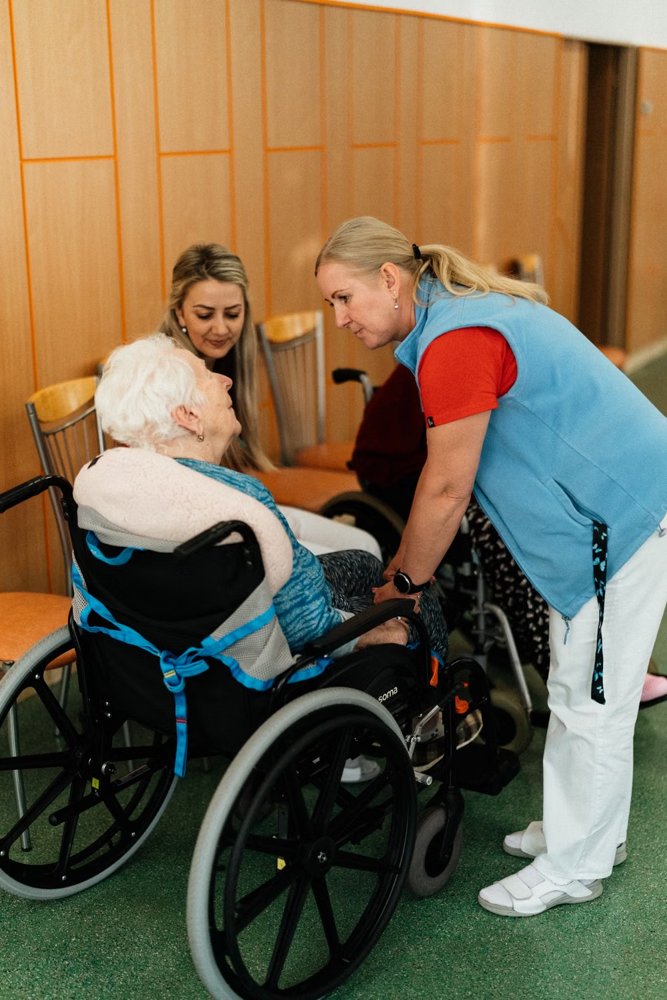
There is a particular kind of family meeting that happens in GP clinics and aged care assessment rooms across Australia every week. A daughter describes her mother: “She barely speaks anymore. She repeats herself, gets confused mid-sentence, and sometimes doesn’t answer questions at all.” The GP nods and mentions memory clinics. A referral goes in. The family prepares for a dementia diagnosis.
What nobody has yet asked is whether the older woman can actually hear the questions being put to her, whether she is in unmanaged pain, whether a stroke has quietly affected her speech, or whether she is significantly depressed. Communication loss and dementia can look identical in a brief clinical encounter. The difference matters enormously, because some of the conditions underneath communication loss are treatable, even reversible.
This article is for families, carers, GPs and allied health practitioners who want to understand why communication changes in older Australians are so frequently misread, what conditions are most commonly missed, and what funded pathways exist to investigate them properly.
What Communication Loss Actually Looks Like
Not all silence is the same. Some older adults become quieter and slower, taking longer to find words. Others stop initiating conversation but can respond if directly addressed. Some give short, flat answers because speaking has become effortful or painful. Others withdraw from social interaction because they are too embarrassed to reveal they can no longer follow what is being said.
All of these patterns can resemble early dementia. Word-finding difficulties, reduced sentence complexity, delayed responses, social withdrawal and apparent confusion appear in diagnostic criteria for Alzheimer’s disease and other dementias. They are also the presenting features of:
- Significant hearing loss, particularly high-frequency loss that makes speech discrimination difficult
- Depression, which often presents in older adults as reduced motivation, social withdrawal and cognitive slowing rather than sadness
- Acquired communication disorders after stroke, including aphasia (language loss) or dysarthria (motor speech difficulty)
- Delirium, which is frequently missed in community settings and can follow infection, medication change or hospitalisation
- Parkinson’s disease and other neurological conditions that affect voice volume and fluency before other features become obvious
- Untreated vision loss, which limits access to the visual cues people rely on to follow conversation
- Unmanaged chronic pain, which consumes cognitive resources and causes withdrawal
- Medication side effects, including sedation, dry mouth affecting speech production, and cognitive dulling
The operational problem is time. A standard GP consultation leaves very little room to distinguish between these possibilities. A family describing communication changes will often trigger a reasonable but premature concern about dementia, because dementia is genuinely common, and because brief cognitive screening tools are not designed to separate dementia from hearing loss, depression or post-stroke aphasia.
Hearing Loss: The Most Commonly Missed Cause
Age-related hearing loss is the single most underdiagnosed condition masquerading as cognitive decline in older Australians. Older adults with untreated hearing loss perform more poorly on cognitive screening tools, not necessarily because their cognition is impaired, but because they cannot reliably hear the questions.
There is a second, more serious reason to take hearing seriously. The 2024 Lancet Commission on dementia prevention identified 14 modifiable risk factors that together account for approximately 45 per cent of global dementia cases, and hearing loss is one of them.[1] The Commission conducted new meta-analyses specifically for hearing loss and depression in its 2024 update, and added untreated vision loss as a further risk factor.[1] So hearing loss does not merely imitate dementia in a consulting room. Left untreated, it also raises the risk of developing it. Treating it matters twice over.
In a home or residential care setting, the problem compounds. Background noise from a television, air conditioning or other residents makes speech discrimination harder. Family members often raise their voices, which distorts vowel sounds rather than improving clarity. The older person nods, gives vague answers, or goes quiet. Everyone interprets this as confusion.
Hearing aids, fitted and used correctly, can produce rapid and striking improvement in apparent cognition and communication. The therapists in the Home Visit Network frequently report being the first practitioner to systematically check hearing as a contributing factor when called in for what a family has described as “memory problems.”
The Hearing Services Program: Fully Subsidised Hearing Aids
This is the part most families do not know, and it changes the cost calculation completely.
The Australian Government’s Hearing Services Program provides subsidised hearing services and devices to eligible Australians, including comprehensive hearing assessments, fully subsidised hearing aids, fitting, and ongoing support.[2] Privately, hearing aids commonly cost several thousand dollars per device, so for an eligible pensioner this is the difference between an unaffordable purchase and a no-cost one.
Eligibility generally extends to Australian citizens or permanent residents aged 21 and over who hold:[2]
- A Pensioner Concession Card (or their dependants)
- A Department of Veterans’ Affairs Gold Card
- A DVA White Card issued for conditions that include hearing loss
- Referral through Disability Employment Services, or current ADF membership
Two important details. A Commonwealth Seniors Health Card does not provide eligibility, which catches many families out. And vouchers are valid for five years, so someone assessed years ago may need to re-engage.[2]
Most relevant to this article: the Program includes a specialist services component for people with additional needs, explicitly including cognitive impairment such as dementia where it is difficult to complete a hearing assessment, visual impairment that limits access to visual cues, intellectual impairment, and mental health issues affecting a person’s ability to manage their hearing loss.[2] In other words, a suspected dementia diagnosis is not a reason to skip the hearing assessment. There is a designated pathway for exactly that situation, delivered through Hearing Australia.
If you are already an NDIS participant and meet Hearing Services Program eligibility, hearing support is generally accessed through the Program rather than the NDIS.[2]
The GPCCMP Pathway and Why It Matters Here
Since 1 July 2025, the GP Chronic Condition Management Plan (GPCCMP) replaced the former GP Management Plan and Team Care Arrangement system. Under the GPCCMP, a GP writes a standard referral letter, with no structured form required, to allied health practitioners. The referral is valid for 18 months and covers up to five allied health sessions per year, with a Medicare rebate of around $61.80 per session.
For someone with suspected communication difficulties, a GPCCMP can unlock access to a speech pathologist for language and communication assessment, an audiologist for hearing evaluation, and an occupational therapist to assess functional cognition in context. A speech pathology assessment is often more clinically informative about the nature of communication difficulty than a brief cognitive screen in a GP office, because speech pathologists are trained to distinguish aphasia, dysarthria, cognitive-communication disorder and hearing-related communication breakdown.
The operational reality is that not every GP currently thinks to issue a GPCCMP referral to a speech pathologist specifically for communication assessment in the context of suspected cognitive decline. Many will refer to a geriatrician or memory clinic first, which can add months of waiting to a situation that may be substantially reversible with targeted allied health input.
Depression and the Silence It Produces
Depression in older Australians is both common and persistently under-recognised. It does not always look like sadness. In older adults it frequently presents as:
- Loss of interest in conversation and social activities
- Reduced speech output and monosyllabic responses
- Slowed thinking and difficulty concentrating
- Apparent memory problems that improve when motivation and energy improve
- Physical withdrawal and reduced movement
Depression is also on the Lancet Commission’s list of modifiable dementia risk factors, with new meta-analytic evidence in the 2024 update.[1] As with hearing, identifying and treating it has value beyond resolving the immediate presentation.
For older adults who are housebound or in residential care, access to mental health services remains a persistent barrier. Telehealth has expanded access for many, but since 1 November 2025 Medicare telehealth rebates require an in-person GP visit within the previous 12 months or MyMedicare enrolment. For someone genuinely housebound who has not seen a GP in person for over a year, establishing telehealth access can require organising a mobile GP visit first. A mental health treatment plan under Better Access provides up to 10 individual psychological sessions per year, arranged through the person’s usual or MyMedicare-registered GP.
Post-Stroke Aphasia and Dysarthria
Stroke produces communication changes that are sometimes dramatic and sometimes subtle. A person with aphasia may lose the ability to find specific words, produce only short fragmented sentences, or understand speech poorly. A person with dysarthria may have fully intact language but slurred, quiet or effortful speech that others interpret as confusion.
The operational problem is that minor strokes often go undiagnosed. Families describe a period when Mum “seemed to change” or “wasn’t herself,” which in retrospect corresponds to a small ischaemic event. Without a clear diagnosis, the communication changes are attributed to vague ageing or, eventually, dementia.
Speech pathology assessment is the appropriate clinical response to suspected post-stroke communication difficulty. It can determine the nature of the disorder, guide communication strategies for families and carers, and identify whether rehabilitation is likely to improve function. Mobile speech pathologists who visit at home can conduct this assessment in a natural environment, which often provides more ecologically valid information than a clinic setting.
Under the Aged Care Act 2024, which commenced 1 November 2025, the Strengthened Aged Care Quality Standards require providers to have systematic processes to identify, assess, manage and review pain (Standard 5, Clinical Care).[3] While that standard is specifically about pain, it signals a broader expectation of systematic clinical assessment rather than assumption. Providers caring for older adults with communication changes should not simply attribute those changes to dementia without documented clinical assessment.
Support at Home and Access to Clinical Communication Care
For older Australians receiving funded home care, the transition from the former Home Care Package system to Support at Home from 1 November 2025 has significant practical implications.
Under Support at Home, speech pathology is classified as clinical care, and clinical care carries zero participant co-contribution regardless of income or assets.[4] A speech pathologist visiting a participant at home to assess and treat communication difficulty is fully government funded with no out-of-pocket cost.
This is a meaningful improvement over the former system, where speech pathology was funded through package budgets that also had to cover domestic assistance, transport and other services, creating difficult trade-offs for participants and families.
Families and care coordinators who are unaware of this change may continue to think of speech pathology as an “extra” that costs money. It does not. Communication assessment and treatment are clinical services under Support at Home, and providers cannot charge a co-contribution for them. My Aged Care (1800 200 422) remains the starting point for queries about Support at Home eligibility and services.
Delirium: Acute Confusion That Disappears When Treated
Delirium is perhaps the most acutely reversible cause of communication change in older adults, and one of the most dangerous to miss. A person with delirium may be incoherent, unable to follow conversation, disoriented, or entirely withdrawn. In a community setting, particularly after a hospital discharge, medication change or urinary tract infection, delirium may go unrecognised because families and even some clinicians assume the confusion is just worsening dementia.
The key distinguishing feature is onset. Dementia develops gradually over months and years. Delirium comes on over hours or days and typically fluctuates through the day. A sudden change in communication is a reason to seek same-day medical review, not a reason to conclude that dementia has progressed.
The Transition Care Program, restructured under the Aged Care Act 2024 from 1 November 2025, allows up to 12 weeks of support after hospital discharge, with home-based care usually beginning within 48 hours.[4] Allied health practitioners involved in this pathway, including occupational therapists and speech pathologists, are well placed to identify residual delirium or delirium superimposed on an undiagnosed underlying condition.
Digital health infrastructure is intended to improve continuity across hospital, GP and community settings, with pathology and imaging results being brought into default sharing with My Health Record from 2026.[5] In theory, a discharge summary flagging delirium should reach a community GP within days. In practice, clinical teams and families still report gaps in information transfer, particularly for older patients living alone.
The Assessment Gap in Regional and Rural Australia
Access to the full range of diagnostic services needed to properly investigate communication change remains geographically uneven. A GP in an inner-city suburb may refer to a geriatrician within weeks, with neuropsychology and speech pathology available at the same facility. A GP in a regional town may face a waiting list measured in months, and the family may lack the resources for repeated long trips.
Medicare Urgent Care Clinics, now permanent with $1.8 billion committed and a network of around 137 clinics nationally, improve access to urgent primary care.[6] They are a useful entry point for acute concerns, including a sudden change that might be delirium, but they are not designed for the extended multidisciplinary assessment that communication change in older adults requires.
Mobile allied health practitioners who visit at home close part of this gap, particularly for patients who are housebound, cannot drive, or find travel physically exhausting. In our experience working with mobile practitioners, a speech pathologist assessing someone in their own kitchen, with their usual noise environment, their familiar family members present and no travel-related anxiety, often captures a far more accurate picture of functional communication than a formal clinic assessment. Families and care coordinators can find qualified mobile practitioners by conducting a postcode search on the Home Visit Network platform.
What Families and Carers Should Do
Request a hearing assessment first. If there is any possibility of undiagnosed or undertreated hearing loss, evaluate it before assuming cognitive decline. Check eligibility for the Hearing Services Program, which provides fully subsidised hearing aids for Pensioner Concession Card and DVA card holders, and which has a specialist pathway for people with cognitive impairment.
Ask your GP about a speech pathology referral. A GPCCMP referral is valid for 18 months and covers up to five sessions. Speech pathologists are trained to distinguish dementia-related communication change from other causes.
Consider whether depression might be contributing. Depression is treatable. If the person has had significant life changes, losses, or has been socially isolated, raise it directly with the GP.
Check vision as well as hearing. Untreated vision loss limits access to the visual cues people use to follow conversation, and is itself a recognised dementia risk factor.
Check the medication list. Sedation, anticholinergic effects and dry mouth from medications can all affect communication and apparent cognition. A GP or pharmacist review is worth requesting, and a Home Medicines Review is Medicare-funded.
Note how quickly the change happened. A change over days rather than months points toward delirium and warrants urgent review.
If the person receives Support at Home services, ask the care coordinator whether speech pathology is in the support plan. It is fully funded clinical care with no co-contribution.
Carers who are struggling with the weight of interpreting and mediating communication for a loved one can contact Carer Gateway (1800 422 737) for practical and emotional support.
Frequently Asked Questions
Can hearing loss really look like dementia?
Yes. Older adults with undiagnosed hearing loss often cannot follow conversations, give vague or incorrect answers, and withdraw from social interaction. These features overlap significantly with early dementia on brief cognitive screening. Hearing loss is also one of the 14 modifiable dementia risk factors identified by the 2024 Lancet Commission, so treating it addresses both the misdiagnosis risk and the longer-term risk. A proper hearing assessment is an essential first step.
Can I get free hearing aids in Australia?
The Australian Government Hearing Services Program provides fully subsidised hearing aids, assessments, fitting and ongoing support for eligible people, including Pensioner Concession Card holders, DVA Gold Card holders and DVA White Card holders where hearing loss is a covered condition. A Commonwealth Seniors Health Card does not confer eligibility. There is also a specialist services pathway for people with cognitive impairment, including dementia, that makes standard assessment difficult.
What is the difference between aphasia and dementia?
Aphasia is a specific disorder of language caused by brain injury, most commonly stroke. It affects the ability to find words, produce sentences or understand speech, but does not necessarily affect memory, personality or other cognitive functions the way dementia does. A speech pathologist can assess this distinction.
Is speech pathology covered under Support at Home?
Yes. Speech pathology is classified as clinical care under Support at Home, and clinical care carries zero participant co-contribution. There is no out-of-pocket cost for speech pathology visits delivered under Support at Home, regardless of income or assets.
How do I get a referral to a speech pathologist for an older family member?
Ask the GP for a GPCCMP referral. Since 1 July 2025, the GPCCMP replaced the former GP Management Plan and Team Care Arrangement. The referral is a standard letter, valid for 18 months, and covers up to five Medicare-rebated allied health sessions per year.
What if the person cannot travel to a clinic?
Mobile speech pathologists, occupational therapists and audiologists can visit at home. For people who are housebound or for whom travel is difficult, a home visit provides a more realistic picture of functional communication and avoids the practical barriers that lead many older Australians to go without assessment entirely.
What is delirium and why does it matter here?
Delirium is an acute medical condition involving sudden confusion, disorientation and communication changes, often triggered by infection, medication change or hospitalisation. It is reversible when the underlying cause is treated. The distinguishing feature is speed of onset: delirium develops over hours or days and fluctuates, whereas dementia develops gradually. A sudden change warrants same-day medical review.
References
- Livingston G et al. Dementia Prevention, Intervention, and Care: 2024 Report of the Lancet Standing Commission (14 modifiable risk factors accounting for approximately 45% of global dementia cases; new meta-analyses for hearing loss and depression; untreated vision loss added as a risk factor).
- Australian Government Department of Health, Disability and Ageing. Eligibility for the Hearing Services Program (Pensioner Concession Card and DVA card eligibility; Commonwealth Seniors Health Card does not confer eligibility; five-year voucher validity; Community Service Obligations specialist pathway for cognitive impairment, vision impairment, intellectual impairment and mental health issues; NDIS interaction). See also Hearing Services Program overview.
- Aged Care Quality and Safety Commission. Safety of Clinical Care Services, Strengthened Quality Standard 5, effective 1 November 2025.
- Australian Government Department of Health, Disability and Ageing. Support at Home Program (clinical care with zero participant co-contribution; Transition Care Program). Commenced 1 November 2025.
- Australian Government Department of Health, Disability and Ageing. Modernising My Health Record (pathology and diagnostic imaging sharing requirements from 2026).
- Australian Government Department of Health, Disability and Ageing. Medicare Urgent Care Clinics ($1.8 billion commitment; national network).