Aged Care Act 2024
Dementia at Home: When to Get Professional Support
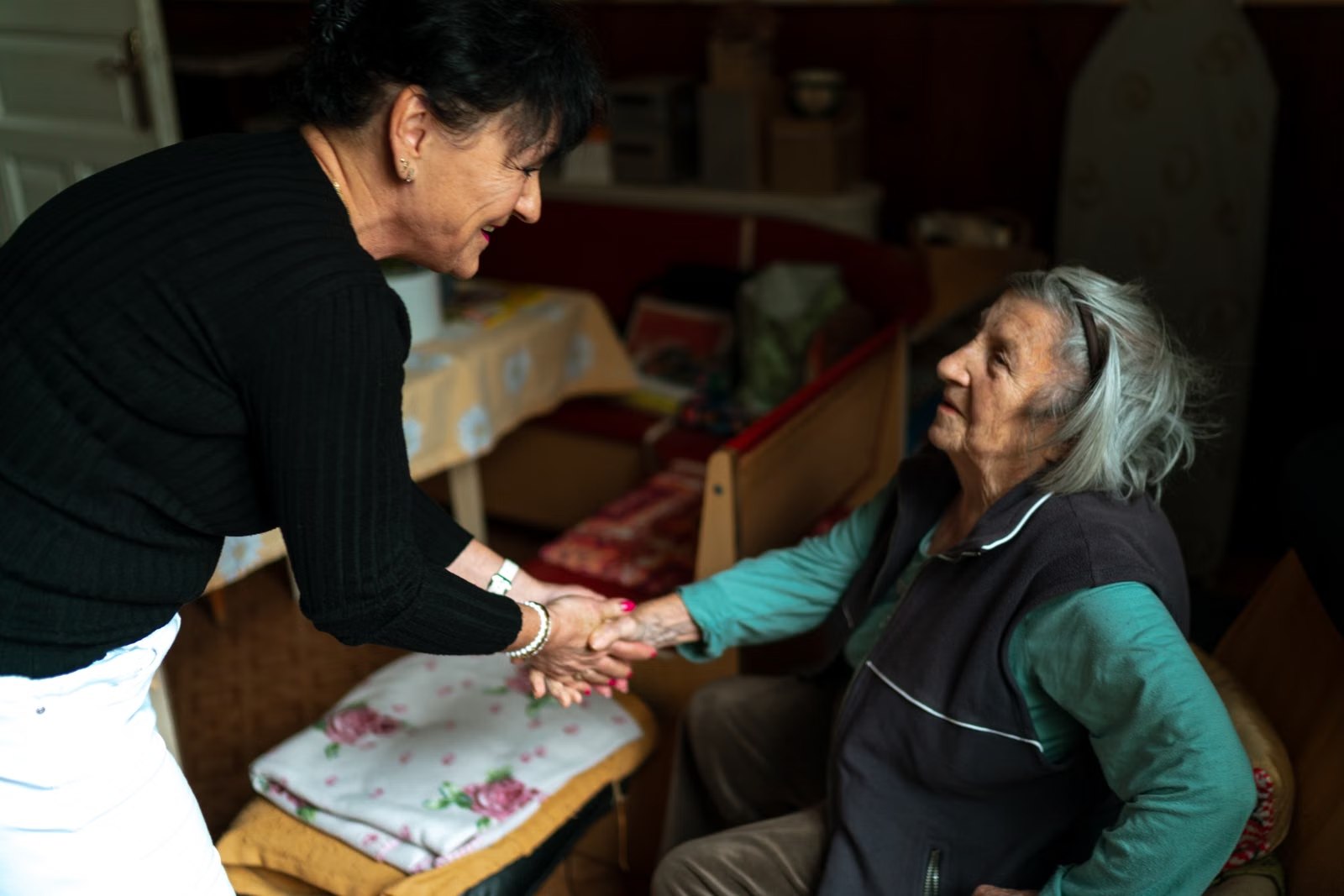
Dementia is now Australia’s leading cause of death, accounting for almost one in ten deaths in 2024 and overtaking heart disease for the first time.[1] An estimated 446,500 Australians are living with dementia in 2026, a figure projected to more than double to over one million by 2065, and around 1.7 million people are involved in their care.[2] Despite that scale, many families still approach a dementia diagnosis as something to manage quietly within the household, at least at first. That instinct is understandable. What follows, though, is often months or years of progressive exhaustion for the primary carer, delayed access to clinical support that could make a genuine difference, and late-stage crises that might have been avoided.
This article is written for the people sitting with those decisions right now: the adult children noticing their parent isn’t coping, the spouses trying to hold everything together, the GPs and care coordinators looking for clear language to help families move forward. It draws on the major aged care and Medicare reforms that have reshaped what professional support at home actually looks like in Australia since 2025, because the system families are entering today is meaningfully different from what existed two years ago.
What “professional support” actually means in a dementia context
When families hear “professional support,” many immediately picture residential aged care. That image stops a lot of conversations before they start. In practice, professional support at home spans a wide spectrum: allied health clinicians assessing and managing falls risk, pain, swallowing difficulties and mobility; registered nurses providing wound care, medication management and health monitoring; and personal care workers assisting with daily routines.
Since 1 November 2025, the legal and funding framework governing all of this changed substantially. The Aged Care Act 2024 commenced on that date, alongside the new Support at Home program, replacing the former Home Care Package system.[3] The shift is not cosmetic. The Act introduces a rights-based framework that families can actively invoke, including enforceable rights to quality care, transparent complaints processes and new obligations on providers.[3]
Critically, under Support at Home, clinical care carries zero participant co-contribution. That means nursing, physiotherapy, occupational therapy, podiatry and speech pathology are fully government funded with no co-payment required, regardless of the participant’s income or assets. For families managing on tight budgets, this changes the calculation considerably. Allied health input that once felt financially out of reach is now accessible as part of funded home support.
The signs that informal care is no longer enough
There is no single moment that marks the transition from “managing at home” to “needing professional help.” But there are clusters of signs that consistently appear in families who have waited too long.
Medication errors are among the most common and dangerous. When someone with dementia is managing their own medicines, or when their carer is managing multiple complex regimens without clinical oversight, mistakes accumulate. The federal government’s planned National Medicines Record, with prescribers required to share medicines data through My Health Record by default, will eventually help clinicians catch polypharmacy risks more quickly.[4] Until that infrastructure is fully operational, families need a pharmacist or nurse involved early, and a Home Medicines Review (a Medicare-funded visit from an accredited pharmacist) is one of the most useful and underused tools available.
Falls and mobility decline often accelerate after diagnosis. An occupational therapist or physiotherapist completing a home assessment can identify environmental hazards and introduce equipment or exercise programs that demonstrably reduce falls risk. Under Support at Home, this clinical input is fully funded.
Carer exhaustion is both a warning sign and a risk factor in its own right. With around 1.7 million Australians involved in caring for someone with dementia, this is not a fringe concern.[2] When the primary carer is not sleeping, is socially isolated, is managing their own health problems or is becoming short-tempered or resentful, the person with dementia is already at risk. Families often minimise this dynamic, framing it as a temporary phase. In the therapists’ experience on mobile networks, it is usually not temporary without external intervention.
Behavioural and psychological symptoms, including agitation, wandering, sleep disturbance and aggression, typically indicate that cognitive decline has progressed beyond what informal care strategies can reliably address. These symptoms carry a high carer burden and often precede acute crisis admissions.
Unexplained weight loss, dehydration or skin breakdown are signs that basic health needs are not being consistently met. These presentations sometimes bring people through emergency departments when earlier allied health or nursing involvement could have prevented the deterioration.
How the assessment pathway works now
If a family believes professional support is needed, the entry point is My Aged Care (phone 1800 200 422). From December 2024, the Single Assessment System replaced the former ACAT model, using the Integrated Assessment Tool to determine what level of support someone needs and what they are eligible for.[3]
The referral to My Aged Care can come from anyone: a family member, a GP, a hospital discharge planner. Families do not need a formal referral from a doctor to start the process, though GP involvement in the assessment and care planning process is valuable. Because the assessment determination draws on structured clinical information, having the GP document the dementia diagnosis and its functional impact clearly can materially affect the support level a person is assessed as needing.
GPs play a significant role in dementia support planning. Since 1 July 2025, the GP Chronic Condition Management Plan (GPCCMP) replaced the former GP Management Plan and Team Care Arrangement system. Under the GPCCMP, a standard referral letter (no structured form required) enables access to up to five allied health sessions per year, with 18-month referral validity. The rebate is around $61.80 per session. For someone with dementia, this typically means access to occupational therapy, physiotherapy, speech pathology or dietetics under Medicare, separate from any Support at Home budget.
For families thinking about telehealth access to the GP: since 1 November 2025, Medicare telehealth rebates require either an in-person GP visit within the previous 12 months or enrolment in MyMedicare. This is worth confirming before arranging a telehealth consultation, particularly for people who have not seen their GP in person recently.
What the Support at Home program funds, and what it costs
Support at Home replaced the former Home Care Package system on 1 November 2025.[3] The program is built around approved budgets rather than package levels, with clinical care fully funded and non-clinical supports subject to co-contributions based on income and assets.
The Strengthened Aged Care Quality Standards, also in force from 1 November 2025, now legally require providers to have systematic processes to identify, assess, manage and review pain (Standard 5, Clinical Care).[5] For someone with dementia who cannot reliably self-report pain, this obligation is especially significant: providers must use validated observational assessment tools and act on findings, not wait for families to raise concerns. Untreated pain is a common and overlooked driver of agitation and distress in dementia, so this is a genuine lever families can use.
For people leaving hospital, two pathway options are worth knowing. The Transition Care Program supports recovery at home for up to 12 weeks, restructured under the Aged Care Act 2024 from 1 November 2025, with home-based care usually beginning within 48 hours of discharge. For people who need functional reablement (rebuilding capacity after a health event), the Restorative Care Pathway provides funding of around $6,000 for up to 16 weeks, with higher amounts (up to around $12,000) available for eligible participants, and clinical care within that pathway carries zero co-contribution.
In practice, families sometimes still report delays in assessment and service commencement during the transition period, a known implementation gap as the system adjusts to new processes.[3] Starting the My Aged Care process early, before a crisis, is the single best protection against those delays.
For budgeting purposes, new Support at Home entrants face a lifetime non-clinical contribution cap of $135,318.69 (or $84,571.66 for no-worse-off transitioners). Transport and independence services count toward this cap; clinical care does not.
The bulk billing changes and what they mean for dementia families
From 1 November 2025, bulk-billing incentives were extended to all Medicare-eligible patients, not just children and concession card holders. A new voluntary Bulk Billing Practice Incentive Program pays practices an extra 12.5 per cent loading if they bulk bill every patient.[6] This was intended to make bulk billing viable for more practices, and the national GP bulk-billing rate reached 81.4 per cent in the November 2025 to January 2026 period.[6]
For dementia families, regular GP contact is essential: medication reviews, cognitive monitoring, care plan updates and referrals all flow through the GP. Whether families can access a bulk-billing GP varies significantly by location. Workforce shortages, rising practice costs and provider burnout mean that bulk billing remains uneven, particularly in regional and rural areas. Families in those areas may face both gap fees and limited appointment availability, which compounds the already significant burden of managing dementia at home.
The GP’s role in dementia care is also changing through digital infrastructure. From 2026, pathology and imaging providers are being brought into a requirement to automatically upload key results to My Health Record, and the planned National Medicines Record will require prescribers to share medicines data by default.[4] Both changes are intended to reduce the risk of missed results and medication errors, which are particular risks in dementia care. The transition carries implementation risks, including incomplete uploads and workflow disruption, so carers should continue to request copies of results and keep their own records during this period.
When to call a mobile allied health practitioner directly
Not everything requires a My Aged Care assessment first. For families who want clinical input quickly without waiting for system navigation, mobile allied health practitioners can be engaged directly, and may be able to claim Medicare rebates through the GPCCMP if a referral from the GP is already in place.
Therapists on mobile networks frequently see dementia clients in homes where the referral has already been arranged but no provider has yet been found. Common requests include home falls risk assessments, cognitive fatigue management strategies, swallowing assessments for people with advanced dementia, and carer education on safe handling and communication techniques. Families and care coordinators can find qualified mobile practitioners by conducting a postcode search on the Home Visit Network platform.
Families often describe the relief of having a clinician in the home rather than trying to transport someone with dementia to a clinic, where unfamiliar environments can significantly worsen agitation and confusion. Mobile service delivery is not a workaround; for this population, it is often the clinically appropriate model.
Carers managing their own health and wellbeing can contact Carer Gateway on 1800 422 737. This service provides access to respite, counselling, peer support and practical assistance for people supporting someone at home.
What the aged care sector is still working through
The transition to the new system has not been seamless. Families report confusion about which programs they are eligible for, particularly where they began under the former Home Care Package system and are now transitioning to Support at Home. Providers are adapting to new documentation requirements, staffing obligations and quality standards simultaneously.[3]
Residential care remains an option many dementia families eventually weigh alongside home-based support. Star ratings now reflect staffing compliance more directly, with aged care homes required to meet both total care minutes and registered nurse minutes targets to achieve higher ratings. For families comparing options, those ratings are a more meaningful signal of staffing adequacy than they were previously.
For those committed to remaining at home, the Support at Home program’s clinical care provisions are the most significant development in home-based dementia support in years. The key is engaging the system early enough that care plans can be built around the person’s current capacity, rather than assembled in crisis. Given that 43 per cent of dementia risk is now attributed to modifiable factors, and that early clinical input measurably changes trajectories, acting early is not just administratively easier, it is clinically better.[2]
Frequently Asked Questions
How do I know when someone with dementia needs professional care at home, not just more family help?
Common indicators include medication errors, falls or near-falls, significant weight loss, carer exhaustion, and behavioural or psychological symptoms such as wandering or aggression. If any of these are present, a professional assessment is warranted rather than optional.
Does professional home support mean giving up independence?
Not at all. Support at Home is designed to maintain and build independence. The Restorative Care Pathway specifically funds reablement, helping people regain function rather than simply maintain the status quo.
Will I have to pay out of pocket for allied health at home?
Under Support at Home, clinical care including physiotherapy, occupational therapy, speech pathology, podiatry and nursing carries zero participant co-contribution. Separately, Medicare-funded allied health sessions are available through the GPCCMP with a rebate of around $61.80 per session.
How do I start the process?
Contact My Aged Care on 1800 200 422. The Single Assessment System, in place since December 2024, will determine eligibility and support needs. Your GP can also initiate a referral or provide a GPCCMP referral for allied health in parallel.
Is telehealth available for dementia-related GP consultations?
Yes, but since 1 November 2025, Medicare telehealth rebates require either an in-person GP visit within the previous 12 months or MyMedicare enrolment. Confirm this with your GP practice before arranging a telehealth appointment.
What support is available for carers, not just the person with dementia?
Carer Gateway (1800 422 737) provides access to respite, peer support and counselling for carers. Recognition of carer exhaustion as a clinical risk factor, not a personal failing, is important; the earlier carers access support, the more sustainable the care arrangement becomes.
What happens if someone needs to go to hospital?
The Transition Care Program supports recovery at home for up to 12 weeks post-discharge, with care usually starting within 48 hours of leaving hospital. Planning for hospital discharge should start early, ideally before admission if a procedure is planned.
References
- Australian Institute of Health and Welfare. Australia’s Health 2026 (dementia the leading cause of death, almost 1 in 10 deaths in 2024; dementia deaths up 39% in a decade).
- Dementia Australia. Dementia Facts and Figures (446,500 living with dementia in 2026, projected >1 million by 2065; ~1.7 million people involved in their care; 43% of burden attributable to modifiable risk factors).
- Australian Government Department of Health, Disability and Ageing. About the New Rights-Based Aged Care Act 2024 (Support at Home, Single Assessment System). Commenced 1 November 2025.
- Australian Government Department of Health, Disability and Ageing. Modernising My Health Record and National Medicines Record (medicines data sharing; pathology and imaging upload requirements from 2026).
- Aged Care Quality and Safety Commission. Safety of Clinical Care Services, Strengthened Quality Standard 5 (processes to identify and manage pain), effective 1 November 2025.
- Australian Medical Association. Changes to Bulk Billing Incentives in General Practice (effective 1 November 2025; national bulk-billing rate 81.4% Nov 2025–Jan 2026). Telehealth eligibility from 1 November 2025 per Department of Health.