cancer recovery exercise
Exercise for Cancer Recovery at Home

For a long time, the standard advice given to people recovering from cancer was to rest. Do less. Conserve energy. That thinking has shifted substantially, and the change is not subtle. Exercise is now being actively prescribed as part of cancer treatment and recovery protocols, and the research behind that shift is strong enough that oncologists, physiotherapists and allied health teams across Australia are embedding it into care plans rather than treating it as an optional extra.
The evidence reached a turning point in June 2025, when the CHALLENGE trial was published in the New England Journal of Medicine. It was the first randomised controlled trial to demonstrate that structured exercise reduces cancer recurrence and death, not just fatigue or quality of life. Among 889 people with stage III or high-risk stage II colon cancer, a three-year structured exercise program begun after adjuvant chemotherapy reduced the risk of recurrence, new primary cancer or death by 28 per cent, and reduced the risk of death by 37 per cent.[1] Eight-year overall survival was 90.3 per cent in the exercise group compared with 83.2 per cent in the control group.[1] The trial was funded in part by Australia’s National Health and Medical Research Council and the University of Sydney Cancer Research Fund, and included Australian investigators and participants.[1]
This matters particularly for Australians who are older, managing multiple conditions, or living with the compounding pressures of the current aged care and home care system. Getting to a clinic for supervised exercise is not straightforward for everyone, and the transition to the new Support at Home program from 1 November 2025[3] has created both new opportunities and real confusion for people trying to access allied health support at home.
What follows is a grounded look at what exercise-based cancer recovery actually involves, why the clinical case for it is solid, and what accessing it looks like for Australians managing recovery at home right now.
The Clinical Case for Exercise in Cancer Recovery
The concern that physical activity might be harmful during or after cancer treatment has largely been replaced by evidence that inactivity carries its own serious risks. Fatigue, muscle loss, cardiovascular deconditioning, depression, lymphoedema and reduced immune function are all associated with prolonged rest during treatment. Exercise interventions, when appropriately tailored, can address many of these.
The Clinical Oncology Society of Australia (COSA), the peak national body for multidisciplinary cancer professionals, has formally called for exercise to be embedded as part of standard practice in cancer care and viewed as an adjunct therapy that helps counteract the adverse effects of cancer and its treatment.[2] COSA’s position statement recommends that people with cancer avoid inactivity and progress towards:
- At least 150 minutes of moderate-intensity aerobic exercise per week (or 75 minutes of vigorous-intensity activity), and
- Two to three resistance exercise sessions per week, involving moderate to vigorous intensity exercises targeting the major muscle groups.[2]
COSA also recommends that best-practice cancer care includes referral to an accredited exercise physiologist or a physiotherapist with experience in cancer care.[2] That last point matters: this is prescribed, supervised exercise calibrated to treatment status, not general encouragement to stay active.
The gap between the recommendation and reality is substantial. COSA notes that 80 to 90 per cent of people with cancer do not meet resistance exercise guidelines, and only a minority engage in sufficient levels of activity overall, despite many wanting to participate in properly designed programs.[2] Access, not willingness, is usually the barrier.
The recommended types vary depending on the cancer, treatment phase and individual capacity, but commonly include aerobic activity, resistance training, flexibility work and, for some patients, specific functional exercises targeting treatment-related side effects such as peripheral neuropathy or lymphoedema. A person recovering from breast cancer surgery has different needs to someone completing chemotherapy for colorectal cancer or living with the ongoing effects of prostate cancer treatment.
What Exercise for Cancer Recovery Actually Looks Like at Home
For many patients, particularly older Australians, people in regional areas, and those with limited mobility or transport, attending a clinic for supervised exercise is not realistic. This is where mobile allied health becomes relevant, and where the structural changes happening in Australian home care right now have direct implications.
A home-based exercise program for cancer recovery might include:
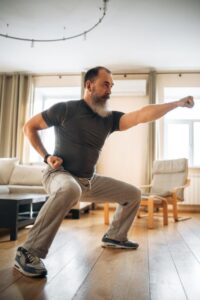
- Gentle aerobic activity such as walking, stationary cycling or chair-based movement, building gradually from short sessions of five to ten minutes toward the 150-minute weekly target. The goal is to improve cardiovascular fitness and reduce fatigue, not to push intensity.
- Resistance training using bodyweight, resistance bands or light weights, targeting major muscle groups. This is especially important for patients on hormonal therapies that accelerate muscle and bone loss, including those on androgen deprivation therapy for prostate cancer or aromatase inhibitors for breast cancer.
- Balance and falls prevention work, which becomes critical when chemotherapy-related peripheral neuropathy affects sensation in the feet and hands, or when steroid-related myopathy has weakened lower limb strength. Falls in cancer recovery can have serious consequences, and a physiotherapist assessing someone at home can identify environmental hazards as well as physical risk factors.
- Lymphoedema management, which often involves specific movement sequences, skin care education, compression garment fitting and, where needed, manual lymphatic drainage. This is specialised work that requires a therapist trained in lymphoedema management.
- Breathlessness management and pacing strategies, particularly relevant for people who have had thoracic surgery, lung cancer treatment or significant treatment-related anaemia.
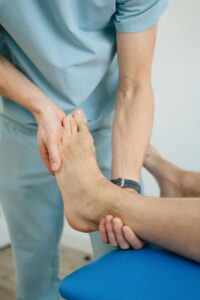
When a mobile physiotherapist or exercise physiologist visits at home, they can observe the actual environment the person lives in, which changes the assessment considerably. A clinic-based therapist works with what the patient reports. A home-based therapist sees the steps at the front door, the bathroom layout, the kitchen bench height, the distance from the bedroom to the toilet, and can calibrate the program and any equipment recommendations accordingly.
It is worth noting that the CHALLENGE trial’s intervention was not intensive gym work. Participants were supported to add roughly the equivalent of a brisk 45 to 60 minute walk three to four times a week, with behavioural support from a trained coach.[1] The active ingredient was structure, supervision and sustained adherence over years, all of which are achievable at home with the right practitioner input.
Accessing Exercise Support Through the Australian Healthcare System
GP Chronic Condition Management Plans
The most common referral pathway into allied health for cancer recovery is through a GP Chronic Condition Management Plan (GPCCMP), which replaced the former GP Management Plan and Team Care Arrangement from 1 July 2025. The GPCCMP uses a standard referral letter rather than a structured form, is valid for 18 months, and provides access to up to five allied health sessions per year at a Medicare rebate of around $61.80 per session. Accredited exercise physiologists and physiotherapists are both eligible providers under this pathway.
For cancer patients, this is often the starting point for accessing physiotherapy, exercise physiology, occupational therapy or other allied health services. However, five sessions per year is a limited allocation for someone managing active treatment side effects or post-treatment rehabilitation, particularly against a trial intervention measured in years rather than weeks. This gap is something families and care coordinators need to plan around, and it is why the aged care funding pathways below matter so much for eligible older Australians.
Support at Home and Allied Health as Clinical Care
For older Australians receiving government-funded home care under the Support at Home program (which commenced 1 November 2025, replacing the former Home Care Package system),[3] there is an important funding development that many families are not yet aware of.
Under Support at Home, nursing and allied health services including physiotherapy, occupational therapy, podiatry and speech pathology are classified as clinical care. Clinical care carries zero participant co-contribution, meaning these services are fully government funded regardless of income or assets.[4] This is a significant change from the previous system, where allied health was often funded from a package budget that participants contributed toward based on income.
For someone recovering from cancer who is receiving Support at Home, a visiting physiotherapist to assist with exercise prescription, mobility, balance and fatigue management should attract no out-of-pocket cost if accessed through the clinical care classification. In practice, families should confirm this directly with their provider, as the transition from the former system is still being worked through operationally, and not all providers have fully updated their internal processes.
From 1 October 2026, personal care services such as showering and dressing are scheduled to be reclassified as fully funded clinical care, removing co-contributions for these supports. Confirm the current status of that change with My Aged Care or your provider before relying on it, as implementation details may have been updated.
Restorative Care Pathway
For people discharged from hospital after cancer surgery or an acute treatment episode, the Restorative Care Pathway under Support at Home is worth knowing about. This provides a time-limited, intensive support period of up to 16 weeks, with a budget of approximately $6,000, and up to approximately $12,000 for eligible participants. It sits separately from any ongoing Support at Home budget.
Allied health delivered under the Restorative Care Pathway is classified as clinical care and carries zero co-contribution. This pathway is specifically designed to support reablement, meaning rebuilding the functional skills and physical capacity to live as independently as possible. For someone recovering from a cancer-related hospitalisation, this can be the right mechanism to fund intensive physiotherapy input during the critical early recovery period.
Families can contact My Aged Care on 1800 200 422 to ask about eligibility and how to access this pathway following a hospital discharge.
What the Current System Does and Does Not Do Well
The bulk billing changes introduced from 1 November 2025 extended bulk-billing incentives to all Medicare-eligible patients, not just children and concession card holders as was previously the case. A new voluntary Bulk Billing Practice Incentive Program also pays practices an additional 12.5 per cent loading if they bulk bill every patient.[5] This should, in principle, reduce barriers to GP access for cancer patients managing ongoing follow-up, which is the gateway to most allied health referrals.
The digital health changes taking effect from 2026, bringing pathology and diagnostic imaging results into default sharing with My Health Record,[6] will improve care coordination for cancer patients seen by multiple practitioners across different settings. A mobile physiotherapist visiting a patient at home who can review recent blood counts, bone density results or imaging is better placed to calibrate exercise intensity safely. However, this benefit depends on digital literacy and appropriate consent processes being in place, which is not always straightforward for older patients or those with cognitive fatigue from treatment.
Workforce shortages remain a genuine constraint. Even when funding pathways are clear and clinically appropriate, finding a physiotherapist or exercise physiologist with oncology experience who provides mobile services in a particular suburb or regional area is not guaranteed. The therapists on our network report significant unmet demand, particularly for oncology-experienced practitioners willing to travel. Families and care coordinators can find qualified mobile practitioners by conducting a postcode search on the Home Visit Network platform.
Practical Steps for Patients and Families
If you or someone you care for is recovering from cancer and you want to incorporate exercise support at home, here is what a realistic pathway looks like in Australia right now:
- Speak to the treating oncologist or haematologist first. Exercise prescription during active treatment needs to be cleared by the treating team, particularly if there are concerns about bone metastases, low platelet counts, cardiac side effects or deep vein thrombosis risk.
- Ask the GP to develop a GPCCMP referral to a physiotherapist or accredited exercise physiologist with oncology or cancer rehabilitation experience. The referral is valid for 18 months and covers up to five allied health sessions under Medicare.
- Contact My Aged Care (1800 200 422) if the person is 65 years or older (or 50 and older for Aboriginal and Torres Strait Islander people) to ask about Support at Home eligibility, the Restorative Care Pathway, and how allied health fits into clinical care funding.
- Ask the home care provider specifically about the zero co-contribution classification for physiotherapy and occupational therapy under Support at Home. Not all providers are communicating this clearly to participants.
- Request a home visit rather than a clinic appointment where mobility, fatigue or transport create barriers. Mobile physiotherapists and exercise physiologists can conduct the initial assessment and deliver ongoing treatment at home.
- Carers supporting a family member through cancer recovery can access their own support through Carer Gateway on 1800 422 737, including counselling, peer support and respite planning.
Frequently Asked Questions
Is exercise safe during chemotherapy or radiation therapy?
For most people, yes, with appropriate modifications. The treating oncologist should confirm there are no specific contraindications, such as bone metastases or very low blood counts. Physiotherapists and exercise physiologists experienced in oncology know how to adjust session intensity based on treatment side effects, fatigue levels and current functional capacity. In the CHALLENGE trial, musculoskeletal adverse events were modestly higher in the exercise group, and only a small proportion were considered related to the program itself.
How much exercise is actually recommended after a cancer diagnosis?
The Clinical Oncology Society of Australia recommends progressing towards at least 150 minutes of moderate-intensity aerobic exercise per week (or 75 minutes of vigorous activity), plus two to three resistance training sessions per week targeting the major muscle groups. These targets should be tailored to your abilities, treatment phase and health status by a qualified practitioner.
Can I access a mobile physiotherapist at home for cancer recovery under Medicare?
Yes, through a GPCCMP referral from your GP, which covers up to five Medicare-subsidised sessions per year. If you receive Support at Home, physiotherapy is classified as clinical care with zero co-contribution regardless of income.
What types of exercise are used in cancer recovery programs?
Programs typically include aerobic activity, resistance training, balance work and specific exercises targeting treatment side effects such as peripheral neuropathy, lymphoedema, breathlessness or muscle weakness. The program should be individualised by a qualified physiotherapist or accredited exercise physiologist.
My parent was just discharged from hospital after cancer surgery. What support can they get at home?
The Restorative Care Pathway under Support at Home may apply, providing up to 16 weeks of intensive support including allied health at no co-contribution cost. Contact My Aged Care on 1800 200 422 to ask about eligibility following hospital discharge.
What if my GP bulk bills? Does that cover allied health visits too?
No. The bulk billing changes from 1 November 2025 apply to GP consultations, not directly to allied health sessions. Allied health visits under a GPCCMP attract a Medicare rebate, but there may be a gap fee depending on the provider. Under Support at Home, allied health as clinical care carries zero co-contribution.
How do I find a mobile physiotherapist with oncology experience?
Ask your GP or oncologist for a recommendation. Home Visit Network connects Australians with qualified mobile allied health professionals who visit at home, including practitioners with experience in cancer rehabilitation. Families can search by postcode.
References
- Courneya KS, Vardy JL, O’Callaghan CJ, et al. Structured Exercise after Adjuvant Chemotherapy for Colon Cancer (CHALLENGE, CCTG CO.21). New England Journal of Medicine, 1 June 2025. DOI: 10.1056/NEJMoa2502760. Disease-free survival HR 0.72; overall survival HR 0.63; 8-year OS 90.3% vs 83.2%. Funded in part by Australia’s NHMRC and the University of Sydney Cancer Research Fund.
- Cormie P, Atkinson M, Bucci L, et al. Clinical Oncology Society of Australia Position Statement on Exercise in Cancer Care. Medical Journal of Australia, 2018;209(4). Exercise dose recommendations and referral to accredited exercise physiologist or physiotherapist with cancer experience.
- Australian Government Department of Health, Disability and Ageing. About the New Rights-Based Aged Care Act 2024. Commenced 1 November 2025.
- Australian Government Department of Health, Disability and Ageing. Support at Home Program (clinical care fully funded with no participant co-contribution; Restorative Care Pathway).
- Australian Medical Association. Changes to Bulk Billing Incentives in General Practice (effective 1 November 2025).
- Australian Government Department of Health, Disability and Ageing. Modernising My Health Record (pathology and diagnostic imaging sharing requirements from 2026).