GPCCMP allied health
Hip Replacement Recovery at Home: What Nobody Tells You
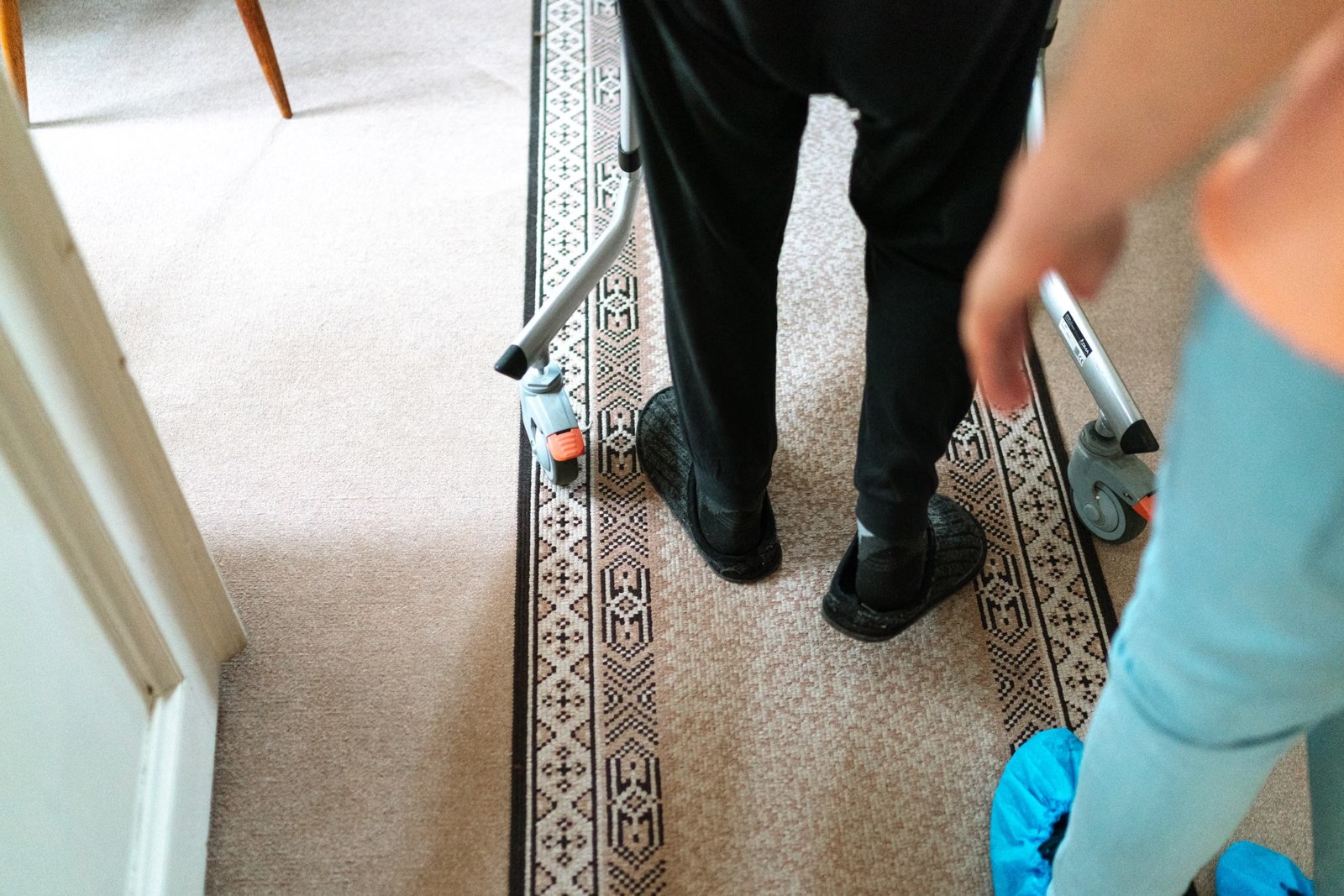
Hip replacement surgery is one of the most commonly performed elective procedures in Australia, and for most people, the outcome is life-changing. More than 85,000 hip and knee replacements are performed here each year, and demand for hip replacement in particular is climbing steadily as the population ages and rates of osteoarthritis and obesity rise.[1] But the weeks that follow discharge are often where patients and families hit unexpected walls. The surgery itself is well-planned. The recovery at home frequently is not.
This post is for patients heading home after a hip replacement, for the family members who will be doing the heavy lifting (sometimes literally), and for the GPs, nurses and allied health practitioners coordinating care from a distance. What follows is not a list of generic recovery tips. It is a frank look at what actually happens in Australian homes during those first six to twelve weeks, and what the current health system does and does not offer to support you through it.
The Discharge Gap Nobody Warns You About
Most people leave hospital within three to five days of a hip replacement. That is fast. Pain is still significant, mobility is limited, and the home environment has almost certainly not been assessed for safety.
What happens next depends enormously on whether a rehabilitation plan was activated before discharge. In many cases, it was not, or it was activated but poorly communicated to the patient. A referral letter gets sent somewhere. A phone number is provided. Then the patient arrives home to stairs they cannot manage, a bathroom without a rail, and a shower they physically cannot use safely.
Occupational therapists and physiotherapists are the two disciplines that matter most in those first weeks. An occupational therapist can assess your home before you arrive back in it, recommend or arrange equipment (raised toilet seats, shower chairs, bed rails, grab rails), and help you modify how you do everyday tasks so you do not violate the hip precautions your surgeon gave you. A physiotherapist guides your movement progression, helps you avoid compensatory patterns that cause secondary pain, and tells you when it is actually safe to push harder.
The problem is that access to both of these disciplines is patchy, particularly in regional and rural areas, and the system for funding them has changed significantly in the last twelve months.
Allied Health Funding After a Hip Replacement: What Is Actually Available
For patients under 65 with a GP
Your GP can refer you for up to five allied health sessions per year under a GP Chronic Condition Management Plan (GPCCMP), which replaced the old GP Management Plan and Team Care Arrangement on 1 July 2025. The referral is now a standard letter rather than a structured form, and the validity period extends to 18 months. The Medicare rebate for each allied health session under this plan is around $61.80. That covers a portion of the physiotherapist’s or occupational therapist’s fee; the gap varies by provider.
If you need more than five sessions in a year, which is very likely after major orthopaedic surgery, additional sessions are out of pocket unless you have private health insurance with extras cover, or you access a public outpatient service.
For patients aged 65 and over accessing the Support at Home program
This is where the system has changed most dramatically, and where the most common misconceptions live.
Under the Support at Home program, which replaced the former Home Care Package system on 1 November 2025, allied health services including physiotherapy and occupational therapy are classified as clinical care. Clinical care carries zero co-contribution for the participant, regardless of income or assets. This means that if you are a Support at Home participant and your care plan includes physiotherapy at home or an occupational therapy home assessment, you do not pay anything out of pocket for those sessions.
This is a significant departure from the old system, where allied health was funded from a package budget that participants partially subsidised. Many older patients and their families do not yet know this has changed, and some are still being quoted co-contributions that no longer apply to clinical care services.
If you are not yet a Support at Home participant but are recovering from a hip replacement at home, contact My Aged Care on 1800 200 422 to request an assessment through the Single Assessment System (which replaced ACAT assessments in December 2024). Assessment uses the Integrated Assessment Tool, and eligibility for Support at Home is determined through that process.
The Restorative Care Pathway: an underused option
For eligible older adults, the Restorative Care Pathway (which replaced Short-Term Restorative Care) offers up to 16 weeks of goal-oriented care, separate from any ongoing Support at Home budget, at a value of around $6,000 (or up to around $12,000 for eligible participants). It was designed precisely for situations like post-surgical recovery, where a time-limited intensive input can help someone regain functional independence. Clinical care within the Restorative Care Pathway also carries zero co-contribution.
Very few patients or families are told about this at discharge. If you are returning home after a hip replacement and are over 65, ask your GP or My Aged Care assessor explicitly whether the Restorative Care Pathway is appropriate for you.
The Transition Care Program
If you are not going straight home from the acute ward but need a step-down period, the Transition Care Program provides up to 12 weeks of support, and home-based care typically starts within 48 hours of discharge. This program was restructured under the Aged Care Act 2024, which commenced on 1 November 2025. It is worth raising with the hospital social worker or discharge planner if you are not confident about going home immediately.
What Mobile Allied Health Actually Looks Like in Practice
Not everyone can get to a clinic. After a hip replacement, many people physically cannot sit in a car comfortably for the first two to four weeks, cannot transfer safely into a clinic chair, and are managing pain and fatigue that make travel exhausting and counterproductive.
Mobile physiotherapists and occupational therapists who visit patients at home provide a fundamentally different kind of assessment. They see your actual environment: the doorway you must pass through with a walking frame, the step you forgot about at the back door, the mattress height that makes getting up dangerous. Clinic-based therapy cannot replicate this.
The therapists on our network consistently report that home visits in the first two weeks post-discharge reveal hazards and movement challenges that would never have come up in a clinic, and that addressing them early significantly changes the recovery trajectory. Families and care coordinators can find qualified mobile practitioners by conducting a postcode search on the Home Visit Network platform.
There are practical considerations. Mobile sessions may cost more than clinic-based sessions because the practitioner’s travel time is incorporated into the fee. Medicare rebates apply to the clinical session regardless of setting. Under Support at Home, clinical care at home carries the same zero co-contribution as in any setting.
The Telehealth Question
Telehealth has expanded substantially since 2020, and many people assume they can manage most of their recovery remotely. For some components of rehabilitation, such as exercise instruction, progress check-ins and answering questions, telehealth is genuinely useful.
However, there is an important Medicare rule that is frequently overlooked: from 1 November 2025, Medicare telehealth rebates require that the patient has had an in-person visit with their GP within the previous 12 months, or is enrolled in MyMedicare. If neither applies, the telehealth service will not attract a Medicare rebate.
For most post-surgical patients this will not be a problem, but if you are in a regional area, are new to a practice, or have not seen a GP in person recently, it is worth confirming your eligibility before assuming a bulk-billed telehealth session is available to you.
For physiotherapy specifically, telehealth has real limitations in the early weeks after hip replacement. A therapist cannot properly assess your gait, your weight-bearing, your hip range of motion, or whether your home environment is set up safely via a video call. In-person assessment, whether at home or in a clinic, is genuinely better in this phase.
Pain Management at Home: What the System Provides and Where the Gaps Are
Pain after hip replacement is real and often underestimated by patients who were told the procedure was “routine.” Most people manage on a combination of regular paracetamol, anti-inflammatories, and sometimes short-term opioids. The transition from hospital-controlled analgesia to self-managed oral medication at home is a common point of distress.
There has been some cost relief on medicines. From 1 January 2026, the general PBS co-payment dropped to $25 per script (down from $31.60), while the concessional co-payment remains $7.70.[2] This provides cost certainty on standard scripts. However, if your pain management requires anything outside the PBS, costs increase substantially.
Your GP Chronic Condition Management Plan (GPCCMP) does not cover specialist pain medicine consultations, so if pain control is inadequate in the weeks after discharge and your surgeon and GP cannot manage it, a pain specialist referral will attract standard specialist fees with the usual gap.
From 1 November 2025, bulk-billing incentives were extended to all Medicare-eligible patients, not just children and concession card holders, and a new voluntary Bulk Billing Practice Incentive Program pays participating practices an additional 12.5 per cent loading when they bulk bill every patient.[3] Whether your GP bulk bills you for post-surgical follow-up will still depend on whether your practice participates. The national GP bulk-billing rate reached 81.4 per cent in the November 2025 to January 2026 period, and more than 1,400 previously mixed-billing practices have since moved to full bulk billing, but rural and regional patients continue to face gap fees in many areas.[3]
The Government has committed $7.9 billion to boost bulk billing, with a target of nine in ten GP services bulk billed by 2030.[4] The gap between that target and current reality in many communities is real and ongoing, so families should not assume that bulk billing is universal yet.
The Carer Burden Nobody Acknowledges
The person going home after a hip replacement is usually aware they will need help. What surprises most families is the intensity and duration of that help.
For the first two to four weeks, a hip replacement patient typically cannot drive, cannot put on their own socks or shoes safely, cannot bend to load a dishwasher or a washing machine, cannot lift anything meaningful, and may need assistance getting in and out of the shower. If they live alone, this is a care crisis waiting to happen.
Partners, adult children and friends absorb most of this. That is a significant, often invisible load. Carer Gateway, reachable on 1800 422 737, provides practical support and carer-directed services for people in this role, including respite options if the recovery is longer than anticipated.
If the patient is a Support at Home participant, personal care services including showering assistance are part of the program. From 1 October 2026, personal care services (showering, dressing and continence support) are scheduled to move into the fully funded clinical care category, removing co-contributions for them entirely. In the interim, check with your Support at Home provider about what co-contributions currently apply to personal care specifically, as the change to full subsidisation has a confirmed date but was not yet in effect as of mid-2026.
Operational Gaps Worth Knowing About
My Health Record and discharge summaries
Hospital discharge summaries should theoretically appear in your My Health Record and be visible to your GP. In practice, data completeness varies significantly. Pathology and imaging providers are being brought into a requirement to automatically upload key information to My Health Record from mid-2026, but until that is fully operational and consistently applied, your GP may not see your most recent test results or imaging from the hospital unless someone actively sends them.[5]
If you are seeing a mobile physiotherapist or occupational therapist in the community, do not assume they have access to your discharge summary. Bring a copy of it, or have your GP send them a referral with the relevant clinical detail included.
Regional access gaps
Medicare Urgent Care Clinics, now made permanent with $1.8 billion in committed funding and a network of around 137 clinics nationally, provide walk-in bulk-billed care for urgent but non-life-threatening issues.[6] If you are recovering at home and develop a wound concern, unexpected swelling, or worsening pain, an Urgent Care Clinic is a faster option than an emergency department for low-complexity presentations. These clinics are bulk billed, with no gap payment, and by July 2026 four in five Australians are expected to live within a 20-minute drive of one.[6]
However, coverage in regional and rural areas remains uneven, and not every community has a clinic yet. For a post-surgical concern that is clearly serious, such as signs of infection, a suspected blood clot, or a fall, an emergency department or a call to your surgical team remains the right course.
Frequently Asked Questions
- How soon after hip replacement should I see a physiotherapist at home?
-
Ideally within the first few days of arriving home, particularly if you have any concerns about how to move safely. A hospital physiotherapist will have given you initial instructions, but a home visit from a community physiotherapist allows assessment of your actual environment and can prevent falls and compensatory injuries.
- Can I get allied health at home funded through Support at Home?
-
Yes. Under Support at Home, physiotherapy and occupational therapy are classified as clinical care and carry zero co-contribution for the participant. Contact My Aged Care on 1800 200 422 if you are not yet assessed, or speak to your care coordinator if you are already a participant.
- What if I need more than five allied health sessions?
-
Your GPCCMP covers up to five Medicare-rebated allied health sessions per year. Beyond that, sessions are privately billed unless covered by private health insurance extras, or you are a Support at Home participant accessing clinical care services. Ask your GP about your options early.
- What is the Restorative Care Pathway and am I eligible?
-
It is a time-limited reablement program for older Australians, providing up to 16 weeks of support at a value of around $6,000 (more for eligible participants), and clinical care within it has zero co-contribution. It is designed for recovery from events like surgery. Eligibility is determined through the Single Assessment System via My Aged Care.
- Can I do my physiotherapy via telehealth?
-
Some components, yes. But Medicare telehealth rebates from 1 November 2025 require either an in-person GP visit within the previous 12 months or MyMedicare enrolment. Additionally, in-person assessment is clinically preferable in the early weeks after hip replacement because it allows gait, weight-bearing and home environment evaluation that telehealth cannot replicate.
- My GP mentioned the GPCCMP has changed. What does that mean for me?
-
The GP Chronic Condition Management Plan replaced the old GP Management Plan and Team Care Arrangement on 1 July 2025. The referral is now a standard letter (no structured form required), it is valid for 18 months, and it provides up to five allied health sessions per year with a rebate of around $61.80 per session. Functionally, the process is simpler, but the number of annual sessions remains the same.
References
- Australian Orthopaedic Association National Joint Replacement Registry (AOANJRR). Background (more than 85,000 hip and knee replacements per year). See also Ackerman et al., projected growth in hip and knee replacement for osteoarthritis to 2030.
- Australian Government. PBS Co-payment and Safety Net ($25 general co-payment from 1 January 2026; $7.70 concessional).
- Australian Medical Association. Changes to Bulk Billing Incentives in General Practice (effective 1 November 2025; national bulk-billing rate 81.4% Nov 2025–Jan 2026; 1,400+ practices moved to full bulk billing). Telehealth eligibility from 1 November 2025 per Department of Health.
- Australian Government Department of Health, Disability and Ageing. Strengthening Medicare ($7.9 billion bulk billing package; 9 in 10 GP visits bulk billed by 2030).
- Australian Government Department of Health, Disability and Ageing. Modernising My Health Record (pathology and imaging upload requirements from 2026).
- Australian Government Department of Health, Disability and Ageing. Major Budget Boost Means Medicare Urgent Care Clinics Are Here to Stay ($1.8 billion; 137 clinics; four in five Australians within a 20-minute drive by July 2026).