aged care podiatry
Mobile Podiatrist Home Visits: Solving Australia’s Access Gap
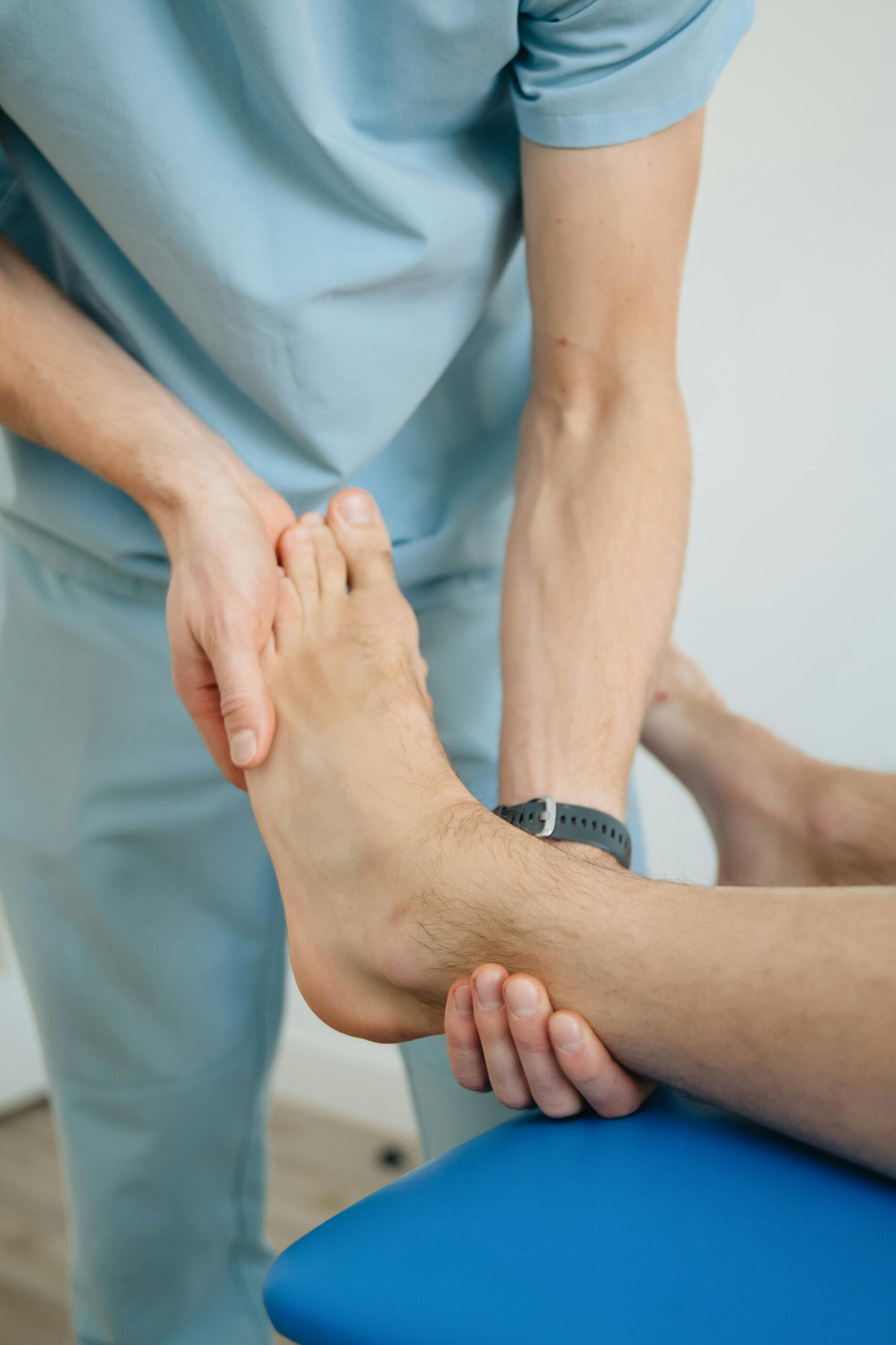
The Podiatry Access Gap in 2026
If you live in a capital city and need to see a podiatrist, you can usually book within a week or two. If you live in regional, rural or remote Australia—or if you are housebound, aged, or living with a complex condition—the reality is very different. Waiting months is common. Driving hours each way is expected. Going without care altogether is more frequent than the system would like to acknowledge.
This is not a new problem, but it has sharpened considerably in recent years as demand has risen, the workforce has not kept pace, and funding structures have struggled to reflect how people actually need to access care. Understanding what is driving this crisis, what is changing at a policy level, and what practical options exist for patients and families is increasingly important for anyone trying to make good healthcare decisions right now.
What Is Driving the Podiatry Access Gap
Podiatry is not a specialty most people think about until something goes wrong. But for people living with diabetes, peripheral vascular disease, rheumatoid arthritis, or age-related mobility changes, regular podiatry care is not optional. It is the thing that prevents a foot ulcer from becoming a hospitalisation, or a hospitalisation from becoming an amputation.
The clinical stakes are significant. A 2025 retrospective study of a major Victorian health service found that diabetes-related foot disease admissions nearly doubled over ten years—from 6,855 to 12,182 annually—with minor amputation rates also increasing over the same period [9]. A July 2025 study in the Medical Journal of Australia tracking 65 Queensland outpatient diabetic foot service clinics found that among people with a first diabetes-related foot ulcer, a substantial proportion required hospitalisation within 24 months, with major amputation the most serious outcome [9]. Diabetes Australia estimates more than 4,400 amputations occur annually in Australia as a result of diabetes, and approximately 10,000 hospital admissions each year are for diabetes-related foot ulcers. These are largely preventable outcomes with timely podiatry intervention.
Australia’s ageing population is one of the clearest drivers of demand. Older Australians, particularly those in residential aged care or living alone at home, disproportionately need foot care, and they are also the group least able to travel to a clinic. The new rights-based Aged Care Act 2024, which commenced on 1 November 2025, formally establishes the right of older people to receive safe, quality care that meets their needs [6]. In practice, that right means very little if a podiatrist is not accessible in the first place.
The workforce distribution problem is structural. Podiatry graduates are trained predominantly in major cities, and most choose to establish practices there. Only 23% of podiatrists work outside major cities, yet 29% of Australians live in these areas. Regional communities compete for a small pool of practitioners, and many go without. The Australian Medical Association’s Vision for Australia’s Health 2024 to 2027 identifies workforce maldistribution as one of the central challenges facing the health system [7][8].
The pipeline is also shrinking. The Australian Podiatry Association’s pre-budget submission reported a 17.3% decline in podiatry enrolments since 2015, with a further 7.5% decline over the five years to the submission date. The closure of two podiatry training programs in NSW and Queensland compounds the problem, with international recruitment increasingly relied upon to fill regional demand gaps [7]. The March 2025 Rural and Remote Allied Health Workforce Final Report recommended implementing a sustainable allied health rural generalist pathway—modelled on the existing rural generalist pathway for doctors—to address allied health shortages in regional areas, including podiatry. Demand for podiatry is forecast to continue growing until the 2050s due to the ageing population and rising chronic disease burden, particularly in regional communities where both are more pronounced.
What the 2026 to 2027 Federal Budget Does and Does Not Address
The 2026 to 2027 Federal Budget includes measures framed around strengthening care and broadening opportunity, with particular emphasis on aged care, primary care reform and workforce investment [1]. The renewed National Health Reform Agreement referenced in the Budget is intended to ensure Australians receive safe, high-quality care regardless of where they live [1].
In practical terms, the Budget’s policy environment is at least nominally supportive of better allied health access. However, podiatry-specific funding measures remain thin. The bulk of allied health investment continues to flow through Medicare’s GP Chronic Condition Management Plan (GPCCMP), which replaced the previous Chronic Disease Management and Team Care Arrangement items from 1 July 2025. Under the GPCCMP, eligible patients can access up to five subsidised allied health visits per calendar year at a rebate of $61.80 per session, with referrals issued via a standard GP letter rather than a structured form [2]. For many patients managing complex foot conditions, five visits is not enough. For those in regional areas where a podiatrist may be unavailable locally, the Medicare rebate is irrelevant if no provider is accessible.
Reactions from across the health sector to the 2026 to 2027 Budget have reflected a tension between the ambition of the policy language and the operational gaps that remain [5]. Allied health bodies have continued to press for funding models that reflect the real cost of delivering care in underserved communities.
The Aged Care and Support at Home Intersection
The Aged Care Act 2024 and the Support at Home program—launched 1 November 2025 to replace Home Care Packages—represent the most significant structural shift in aged care in decades. For podiatry specifically, the most important change is this: clinical podiatry services under Support at Home are 100% government-funded with no participant co-contribution required, regardless of financial status [6]. This zero-contribution model for clinical care is new and directly relevant to older Australians who were previously managing podiatry costs within a Home Care Package budget.
Until 1 July 2026, providers set their own prices for Support at Home services. From 1 July 2026, government price caps set by the Independent Health and Aged Care Pricing Authority (IHACPA) will apply to all Support at Home services, including podiatry [6]. IHACPA has flagged it will monitor pricing in regional and remote areas specifically, with rural and remote pricing adjustments under active consideration for future years — a development directly relevant to mobile podiatry providers who face higher travel costs. The Australian Podiatry Association has warned that risks associated with Support at Home are amplified in regional, rural and remote areas, and is advocating for evidence-based pricing that reflects true service delivery costs.
It is also worth noting that the Commonwealth Home Support Programme (CHSP) continues as a separate program until no earlier than 1 July 2027. Over half of APodA members report delivering services under CHSP and/or Home Care Package arrangements, meaning many podiatrists are currently navigating a dual funding environment with different rules, pricing, and administrative requirements running in parallel.
Support at Home also applies pressure to residential aged care providers to demonstrate that residents receive appropriate allied health services, including foot care, as part of their care obligations under the strengthened quality standards. From 1 October 2026, personal care services will also be reclassified as clinical care under Support at Home and fully funded at no cost.
DVA Patients and What They Are Entitled To
Veterans and war widows covered by the Department of Veterans’ Affairs (DVA) are entitled to a broader range of allied health services than most Medicare patients, and podiatry is included. Gold Card holders in particular can access podiatry without the five-visit limit that applies under the GPCCMP.
The challenge for DVA patients in regional areas mirrors the broader access problem. Entitlement on paper does not translate to care in practice if no local podiatrist accepts DVA patients, or if the nearest provider is a significant distance away. Mobile podiatrists who accept DVA billing arrangements can make a real difference for this group, and it is one of the areas where the home-visit model has the most direct impact.
NDIS Participants and Foot Care
For NDIS participants, podiatry is fundable under the Capacity Building budget—specifically within the Improved Daily Living category. From 1 July 2025, all allied health therapy supports under NDIS must be funded from Capacity Building; the previous flexibility to draw on Core supports for therapy no longer applies [2]. The NDIS price limit for podiatry was also reduced by $5 to $188.99 per hour from 1 July 2025 [2].
Two significant developments in 2026 are directly relevant to NDIS participants needing podiatry. First, the Australian Podiatry Association has warned that the NDIS podiatry supports guideline is being used by planners to redirect patients from NDIS-funded podiatry to Medicare’s GPCCMP—a substitution that is clinically problematic. Where NDIS plans typically include 8–12 hourly podiatry sessions per year, the GPCCMP provides only five 20-minute sessions. APodA has called on government to cease this substitution, citing the risk of reduced mobility, falls, infections, hospitalisations, and amputations for affected participants [2].
Second, the April 2026 ‘Securing the NDIS’ reset announced by Minister Butler is targeting tighter eligibility criteria and average plan reductions from approximately $31,000 to $26,000. APodA has flagged that eligibility criteria for participants accessing NDIS podiatry supports may be further tightened under this reset, with implications for how podiatry therapy supports are captured in future plans [2].
One significant structural headwind worth naming directly: from 1 July 2025, NDIS provider travel reimbursement was reduced from 100% to 50% of the hourly therapy rate, with a maximum of 60 minutes each way in regional areas and the removal of rural area loadings in WA, SA, TAS and NT [2]. A survey of podiatrists found that 62% would start declining referrals for complex disability clients and 57% would cease travelling to see participants at home as a result of these changes. Patients and families seeking NDIS-funded mobile podiatry in regional areas should ask providers directly whether the July 2025 travel changes have affected their availability or travel range.
Telehealth: Useful but Limited for Podiatry
Telehealth expansion has opened up access to many allied health services for people in regional and remote areas. For podiatry, telehealth has real but narrow applications. A podiatrist can provide education, assess wound photographs, and support care planning remotely. But the clinical core of podiatry—physical assessment and treatment of feet—cannot be delivered through a screen.
This is not a criticism of telehealth; it is simply a recognition that some disciplines require hands-on care. The therapists on our network consistently report that their regional and outer-suburban patients describe telehealth as helpful for some things, but that it has never replaced the relief of having someone actually look at and treat their feet. That is especially true for elderly patients with poor eyesight, limited manual dexterity, or diabetic neuropathy, where self-assessment is simply not reliable.
Mobile Podiatry as a Structural Response
Home Visit Network was built by a mobile therapist who understood that access barriers are often invisible to the people designing services from offices and conference rooms. When you cannot drive, when your mobility is limited, when you live two hours from the nearest clinic, the clinic model simply does not work for you.
Mobile podiatry—a qualified podiatrist who travels to the patient’s home rather than requiring the patient to travel to a clinic—is increasingly recognised as a structural necessity rather than a convenience. For housebound patients, for residential aged care residents, for people with complex disabilities, and for those in regional areas without local clinical access, the mobile model is often the only model that actually delivers care.
Medicare, DVA, NDIS and Support at Home funding can all support mobile podiatry visits in appropriate circumstances. The practical question is often less about whether funding exists and more about whether a suitably qualified mobile practitioner is available and how to connect with them efficiently. Families who use our platform tell us that the matching process is often the hardest part: they may have a referral or a funded plan, but finding someone qualified, available, mobile, and willing to work in their area has historically required significant time and effort from people already under pressure.
What GPs and Care Coordinators Need to Know
General practitioners and care coordinators play a critical role in initiating podiatry referrals for high-risk patients. A GPCCMP referral can be directed to a mobile podiatrist in the same way it is directed to a clinic-based practitioner. For aged care residents, the facility’s care plan can specify mobile podiatry. For NDIS participants, the support coordinator can include mobile podiatry in service bookings. The mechanism exists; the awareness of how to use it is the gap.
The AMA’s 2024 to 2027 policy vision calls for genuine workforce planning and a health system that meets people where they are [7]. For referring clinicians in regional areas or working with housebound patients, knowing that mobile podiatry is an available and fundable option changes what they can offer.
What Is Still Missing
Despite the progress in funding structures and the political attention on aged care and primary care reform, several gaps remain significant. There is no dedicated Commonwealth funding stream for mobile allied health in rural and remote areas outside the existing Medicare and DVA frameworks. The GPCCMP cap of five visits remains a real constraint for patients with chronic foot conditions requiring more frequent care. The NDIS travel reimbursement changes have undermined the financial viability of mobile podiatry for participants in regional areas. And the workforce pipeline for podiatry in regional communities has not been structurally addressed in recent budgets.
Frequently Asked Questions
Can I get a podiatrist to come to my home under Medicare?
Yes, in many circumstances. If your GP has set up a GP Chronic Condition Management Plan (GPCCMP)—which replaced the old Chronic Disease Management and Team Care Arrangement items from 1 July 2025—you can receive Medicare rebates for up to five allied health visits per year at $61.80 per session, including podiatry. These can be provided by a mobile podiatrist who comes to your home. The rebate applies to the service, not to the location.
Does Support at Home cover mobile podiatry?
Yes. Under the Support at Home program, which replaced Home Care Packages from 1 November 2025, clinical podiatry services are fully government-funded with no out-of-pocket co-contribution required. If you are an eligible older Australian with a Support at Home classification, you should not be paying for clinical podiatry visits. Speak with your Support at Home provider to confirm podiatry is included in your care plan.
I live in a regional area and cannot find a local podiatrist. What are my options?
Mobile podiatrists who travel to patients in regional areas do exist, though they are not always easy to find through standard clinic directories. Platforms that specifically connect patients with mobile practitioners, including Home Visit Network, are designed to address exactly this problem. DVA Gold Card holders in regional areas can also request mobile podiatry as part of their entitlements.
My elderly parent is in residential aged care. Are they entitled to podiatry?
Under the Aged Care Act 2024, which commenced on 1 November 2025, aged care providers have a clear obligation to ensure residents receive care that meets their assessed needs. Podiatry for an aged care resident with foot health needs should be part of their care plan. If it is not happening, the family or the resident can raise this formally with the facility and, if needed, with the Aged Care Quality and Safety Commission.
What about NDIS participants who need podiatry?
Podiatry can be funded under an NDIS plan through the Capacity Building budget (Improved Daily Living category). From 1 July 2025, all therapy supports must be funded from Capacity Building. A registered podiatrist who provides mobile services can deliver care in the participant’s home. Note that the July 2025 NDIS travel cap changes have affected some providers’ willingness to travel in regional areas—ask your potential provider directly about their current travel range.
How do I find a mobile podiatrist through Home Visit Network?
You can search for mobile podiatrists on the Home Visit Network platform by location and funding type, including Medicare, DVA, NDIS and private fee. Practitioners listed on the network have been verified and offer home visits as part of their standard practice.
References
- Strengthening care and broadening opportunity, Budget 2026–27. budget.gov.au
- National Disability Insurance Agency. NDIS Pricing Arrangements and Price Limits 2025–26. Allied health therapy supports exclusively Capacity Building from 1 July 2025; podiatry rate reduced to $188.99/hr; travel reimbursement capped at 50% of hourly rate; regional area loadings removed. ndis.gov.au; Australian Podiatry Association. NDIS Survey Summary 2025: 62% of podiatrists would decline complex disability referrals; 57% would cease home visits following travel cuts. NDIS podiatry guideline misuse to redirect participants to MBS CDM identified. NDIS ‘reset’ April 2026 — tighter eligibility for podiatry supports flagged. podiatry.org.au; Department of Health, Disability and Ageing. GPCCMP effective 1 July 2025. health.gov.au
- 10 reforms reshaping Australian health regulation. themodernregulator.com
- Croakey. Rolling wrap of health sector reactions to the 2026–27 Federal Budget. croakey.org
- Australian Government Department of Health, Disability and Ageing. Aged Care Act 2024 — commenced 1 November 2025. Support at Home program: clinical podiatry zero participant contribution; IHACPA price caps from 1 July 2026; rural/remote pricing adjustments under consideration for 2026–27; personal care reclassified as clinical care from 1 October 2026. health.gov.au; IHACPA. Consultation Paper on Pricing Framework for Support at Home Aged Care Services 2027–28. March 2026. ihacpa.gov.au
- Australian Medical Association. Vision for Australia’s Health 2024 to 2027. ama.com.au; Australian Podiatry Association. Pre-Budget Submission 2024–25: 17.3% decline in podiatry enrolments since 2015; two podiatry programs closed in NSW and QLD. podiatry.org.au; ACDHS. Rural and Remote Allied Health Workforce Final Report, March 2025. Rural generalist pathway for allied health recommended.
- Royal Australasian College of Physicians. Healthcare Reform. racp.edu.au
- Do C, et al. Trends in diabetes-related foot disease in a tertiary health service in Australia: a 10-year retrospective study. Internal Medicine Journal. 2025. doi: 10.1111/imj.70036. Annual DFD admissions increased from 6,855 to 12,182 over ten years with increased minor amputation rates; Zhang M, et al. Incidence of and risk factors for hospitalisations and amputations for people with diabetes-related foot ulcers in Queensland. Medical Journal of Australia. 2025;223(3). doi: 10.5694/mja2.52703; Diabetes Australia. Facts and figures — 4,400+ annual amputations; 10,000 annual hospital admissions for diabetic foot ulcers. diabetesaustralia.com.au