accredited exercise physiologist
NDIS Home Exercise Physiology: What Actually Happens
For many NDIS participants, the gap between “exercise is funded in my plan” and “I am actually exercising regularly” is enormous. It is rarely a motivation problem. It is a logistics problem, an accessibility problem, and sometimes a dignity problem. Getting to a gym requires transport that works around a disability, equipment that may or may not be accessible when you arrive, change room facilities that vary wildly, and the sustained energy it takes to exercise in a public space while managing a condition that is already demanding. By the time all of that is organised, a lot of participants have simply stopped trying.
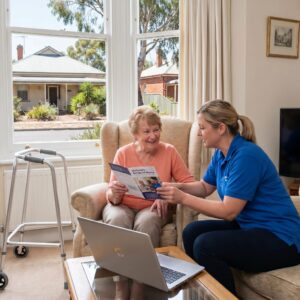
Home-based exercise physiology cuts through those barriers at the source. An accredited exercise physiologist (AEP) comes to where the participant already is, designs a program around the actual space available, and delivers the session without requiring the participant to spend half their daily energy reserves getting there. This is not a compromise on quality. In many cases, it is the only model that consistently works.
What Is NDIS Home Exercise Physiology, and Who Is It For?
Exercise physiology under the NDIS sits within the Capacity Building budget, most commonly under the Improved Health and Wellbeing category, though it can also be accessed through the Improved Daily Living category depending on a participant’s goals [1]. The current NDIS price limit for exercise physiology is $193.99 per hour under the 2025–26 Pricing Arrangements, with home visit travel charged at 50% of the hourly rate (from 1 July 2025) [1]. This travel loading applies each way, meaning the cost of a home visit is moderately higher than a clinic visit — an important consideration when helping participants allocate their plan budget across the year.
Exercise physiology is available to participants whose disability creates functional impairments that affect their capacity to maintain physical health, strength, mobility, cardiovascular fitness or pain management. An AEP is a university-trained allied health professional, registered with Exercise and Sports Science Australia (ESSA), who designs and delivers evidence-based exercise programs for people with chronic conditions, injuries, neurological conditions, and physical or intellectual disabilities. This is different from a personal trainer. AEPs are trained specifically in the clinical and physiological dimensions of disability and disease, which matters considerably when you are working with someone whose condition may change session to session.
Home visits are appropriate for participants who are housebound or near-housebound, who find transport to a clinic genuinely difficult due to their disability, who have anxiety, fatigue, or sensory sensitivities that make public exercise spaces hard to manage, or who simply perform better in a familiar environment. In our experience working with mobile practitioners, that last group is larger than most referrers assume.
The Logistics Problem That Nobody Talks About Loudly Enough
Here is what a gym visit often looks like for an NDIS participant with a physical disability or complex condition: the participant books transport through an NDIS-funded support worker or NDIA transport support, confirms accessible gym equipment is actually available (not always guaranteed), travels to and from the facility, manages any personal care needs that arise, and then exercises. That sequence is exhausting before a single rep is completed.
For participants with neurological conditions such as multiple sclerosis or acquired brain injury, fatigue is not just inconvenience. It is a primary symptom. For participants with anxiety, autism spectrum disorder, or psychosocial disability, a busy commercial gym can be genuinely overwhelming. For participants with complex communication needs, interactions with unfamiliar gym staff present a real barrier.
The result is a pattern the therapists on our network report seeing regularly: a participant’s plan includes exercise physiology, the funding is allocated, and three months in, utilisation is minimal or nil. The participant has not failed. The model has failed the participant.
Home-based exercise physiology addresses this structurally — not by encouraging harder, but by removing the barriers that were quietly preventing engagement in the first place.
Can NDIS Fund a Gym Membership?
This question comes up often and deserves a direct answer. The NDIS does not directly fund commercial gym memberships as a standalone support. The NDIA’s position is that gym memberships are a general living expense that non-disabled Australians also incur. However, this does not mean exercise in or associated with a gym is never NDIS-funded. If an AEP determines that clinic-based or gym-based supervised sessions are the most appropriate intervention for a specific participant, those supervised sessions with the AEP can be funded. The membership fee itself is generally not separately claimable [1].
This distinction matters practically. Participants sometimes use plan funding to pay for a gym membership believing it is covered, then find the claim rejected or their plan reviewed unfavourably. If you are a participant, carer or support coordinator and you have questions about what is claimable under a specific plan, confirming directly with the NDIA or a plan manager before committing funds is strongly advisable.
For participants whose barriers to exercise are primarily about access and logistics rather than preference, home-based sessions where the AEP brings portable equipment sidestep this entire issue.
What an NDIS Home Exercise Physiology Session Actually Looks Like
A qualified AEP conducting an initial home visit will typically complete a functional assessment: observing how the participant moves through their own space, noting what furniture or fixed surfaces are available for support, identifying fall hazards, and establishing baseline capacity across strength, endurance, balance, flexibility and pain response. From this, they build a program specific to the participant’s goals, the space available, and the fluctuations in capacity that are normal for that person’s condition.
In a typical living room or backyard, a well-equipped AEP can deliver:
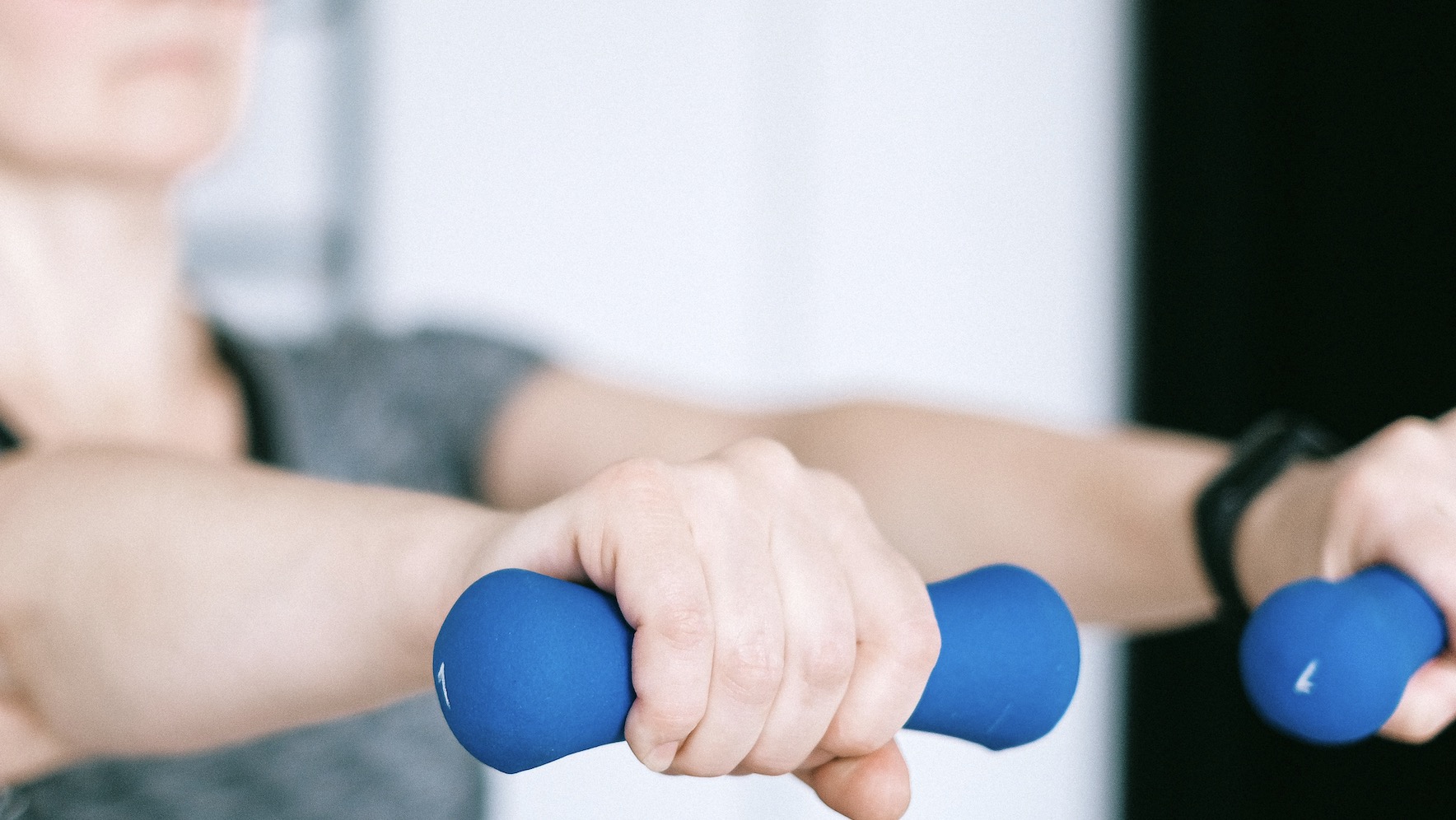
- Resistance training using portable equipment such as resistance bands, light dumbbells, and bodyweight progressions
- Balance and proprioception work using the participant’s own furniture as support structures
- Cardiovascular conditioning using seated or standing exercises calibrated to the participant’s tolerance
- Functional movement training — exercises that directly improve the participant’s capacity to perform daily tasks such as sit-to-stand transfers, reaching, and walking stability
- Pain management protocols, particularly relevant for participants with musculoskeletal conditions or central sensitisation
- Breathing and relaxation techniques integrated into warm-up or cool-down
The AEP also documents progress, communicates with the participant’s broader support team including GPs, physios, occupational therapists, and support coordinators, and adjusts the program as the participant’s condition or goals change.
The NDIS Context in 2025 and 2026: What Has Changed
The broader NDIS reform environment is directly relevant to how exercise physiology fits into a participant’s plan. In April 2026, Minister Butler announced the ‘Securing the NDIS for Future Generations’ plan, targeting average participant plan funding reductions from approximately $31,000 to $26,000 and a reduction in participant numbers from around 760,000 to 600,000 by the end of the decade [2]. The NDIS Amendment (Integrity and Safeguarding) Act 2026 received Royal Assent on 8 April 2026, strengthening the NDIS Commission’s compliance powers and tightening provider obligations.
Three structural pressures specific to exercise physiology are worth naming directly, because they affect the realistic landscape for both participants and providers.
The EAC formal review of exercise physiology. In September 2025, the NDIS Evidence Advisory Committee (EAC) commenced its first-ever formal review of exercise physiology as an NDIS support. The review, which ran through November 2025, is examining the evidence base for EP as a funded disability support — a process that could influence future NDIS funding decisions for EP across all participant cohorts. The outcome of this review is not yet finalised, but participants and referrers making long-term planning decisions should be aware that EP’s inclusion in future plans may be subject to greater scrutiny depending on the findings [2].
The price freeze and workforce risk. The NDIS EP rate of $193.99/hr has remained effectively frozen for five years, with Exercise and Sports Science Australia (ESSA) formally flagging that the rate does not reflect the true cost of delivering exercise physiology services — particularly home visit models that involve significant non-billable travel, administration, and report writing time. ESSA has warned that the combination of the price freeze and the July 2025 travel reimbursement cut to 50% creates a genuine workforce sustainability risk, with some AEPs already declining NDIS home visit referrals in regional areas due to financial unviability [2]. Participants in outer metropolitan and regional areas should confirm with potential providers that they are still accepting NDIS home visits before assuming availability.
The stated supports barrier. October 2024 legislative changes tightened the rules around stated supports in NDIS plans. Where a plan explicitly names a specific support (e.g. “physiotherapy”) in the Capacity Building Improved Daily Living category, funds from that line cannot be redirected to exercise physiology without a plan variation. This is one of the most commonly reported real-world access barriers for participants who need EP but have a plan worded around a different allied health discipline. Support coordinators and plan managers should confirm how EP is captured in a participant’s current plan before assuming the funding is freely accessible [1].
For exercise physiology specifically, these reforms translate into greater scrutiny of whether funded supports are clearly and demonstrably linked to the participant’s disability-related functional impairments. An AEP’s clinical documentation — including assessment findings, goal alignment, and progress notes — needs to be thorough enough to withstand plan review. This is not a new requirement, but it is an increasingly enforced one.
The 2026–27 Budget committed $2 billion to the Thriving Kids program within a broader $5 billion foundational supports package [3], primarily aimed at children who do not meet NDIS eligibility. This signals a structural re-design of disability-adjacent supports in Australia, with explicit intent to reduce NDIS participant numbers over time. For existing participants, this underscores the importance of ensuring funded supports like exercise physiology are clearly linked to disability-specific goals, not general wellness.
From 1 July 2025, new quarterly funding periods were also introduced for NDIS plans, meaning participants manage budgets in shorter intervals. Support coordinators and plan managers need to account for this — along with the 50% travel loading for home visits — when helping participants allocate their Improved Health and Wellbeing funding across a year.
Digital health expansion is also reaching exercise physiology. Hybrid models where some sessions are delivered via telehealth and some are in-person are increasingly used, particularly for participants in regional or rural areas where access to a mobile AEP may be limited [4]. This can extend the reach of a participant’s plan budget, though it requires digital access and some level of digital comfort that not all participants have.
Why the Home Setting Produces Better Outcomes for Many Participants
There is a clinical rationale for home-based delivery that extends beyond convenience. When exercise occurs in the environment where the participant actually lives, the functional gains transfer more directly. A participant who improves their sit-to-stand capacity using their own couch is practising the exact movement they will need to perform dozens of times each day. Grip strength developed on their own door handles and kitchen surfaces has immediate, visible application.
For participants with neurological conditions, cognitive disabilities, or anxiety, the familiar environment also reduces the cognitive and emotional load of the session itself. The participant is not managing a new environment, unfamiliar equipment, and an unfamiliar social setting simultaneously. They are focused on the exercise.
Carers and family members often observe this difference directly. Home sessions tend to produce more consistent engagement, fewer cancelled appointments due to transport failure or fatigue, and a more sustainable routine over time. Families who use our platform tell us that the reduction in logistical stress around health appointments is significant, particularly for participants with high support needs.
What to Expect From Referrers, Support Coordinators, and GPs
Referrals for home exercise physiology under the NDIS do not require a GP referral in the way that Medicare-rebated services do. The participant’s plan simply needs to include funding in the Improved Health and Wellbeing or Improved Daily Living category. However, a GP letter or a recent allied health report documenting the participant’s condition, functional limitations, and goals significantly strengthens the case for the service and helps the AEP conduct a more targeted initial assessment.
For support coordinators, the practical steps are: confirm the participant has Capacity Building funding in the relevant sub-category in their current plan, identify an AEP who provides mobile services in the participant’s area, establish whether the participant has a plan manager or is NDIA-managed (which affects how invoices are processed), and ensure there is a clear goal documented in the plan that exercise physiology can address. Account for the 50% travel loading when calculating how many home sessions a plan budget can support.
GPs managing participants with chronic conditions, deconditioned musculature post-hospitalisation, or disability-related pain should know that a home AEP can be one of the more effective and sustainable interventions available, particularly when clinic attendance is genuinely difficult.
Frequently Asked Questions
Is exercise physiology covered by the NDIS?
Yes, exercise physiology delivered by a registered AEP can be funded under the Capacity Building budget — most commonly the Improved Health and Wellbeing category, and sometimes the Improved Daily Living category. The current NDIS rate is $193.99 per hour under the 2025–26 price guide. The service must be linked to the participant’s disability-related functional goals.
Does the NDIS cover gym memberships?
Generally no. The NDIA considers gym memberships a general living expense. Supervised sessions with an AEP at a gym or clinic can be funded, but the membership fee itself is typically not claimable. Home-based sessions avoid this issue entirely.
How many sessions can I get under my NDIS plan?
This depends on your individual plan budget and the NDIS price guide rate of $193.99/hr. Home visits include a travel loading of 50% of the hourly rate each way. Your support coordinator or plan manager can help calculate how many sessions your Capacity Building funding will support, factoring in the travel component.
What equipment does a home exercise physiologist bring?
Most AEPs who conduct home visits carry portable equipment including resistance bands, light weights, balance aids, and assessment tools. The program is designed around what your space and physical capacity allow.
Can I access home exercise physiology via telehealth?
Some AEPs offer hybrid models combining in-person and telehealth sessions. This can extend your budget or improve access if you live in a regional area, though it depends on the AEP’s service offering and your digital access.
Do I need a referral from my GP?
Not in the way you would for Medicare-rebated services. You need appropriate Capacity Building funding in your NDIS plan. A GP letter or allied health report is helpful but not always mandatory — it strengthens the clinical rationale and helps the AEP conduct a more targeted assessment.
How is home exercise physiology different from a support worker helping me exercise?
An AEP is a university-trained clinician with specific expertise in exercise and chronic disease or disability management. A support worker may assist with physical activity as part of daily living supports, but they are not qualified to design, monitor or progress a clinical exercise program.
References
- National Disability Insurance Agency. NDIS Pricing Arrangements and Price Limits 2025–26. Exercise physiology: $193.99/hr; home visit travel charged at 50% of hourly rate from 1 July 2025; fundable under Capacity Building — Improved Health and Wellbeing (item 12_027_0126_3_3) and Capacity Building — Improved Daily Living (item 15_200_0128_1_3). Gym memberships not separately claimable as a general living expense. October 2024 legislative changes: stated supports in Capacity Building categories cannot be redirected to other disciplines without a plan variation. ndis.gov.au
- Department of Health, Disability and Ageing. Securing the NDIS for Future Generations, April 2026. Average plan funding targeted from ~$31,000 to ~$26,000; participant numbers targeted to reduce from 760,000 to 600,000; NDIS Amendment (Integrity and Safeguarding) Act 2026, Royal Assent 8 April 2026; quarterly funding periods from 19 May 2025. health.gov.au; Exercise and Sports Science Australia (ESSA). Submission on NDIS EP pricing: five-year price freeze at $193.99/hr does not reflect true cost of service delivery; workforce sustainability risk flagged. essa.org.au; NDIS Evidence Advisory Committee. Formal review of exercise physiology as an NDIS support, commenced September 2025. ndis.gov.au
- Australian Government. Budget 2026–27: Strengthening care and broadening opportunity. $2 billion Thriving Kids program; $5 billion foundational supports package. budget.gov.au
- Australian Digital Health Agency. National Digital Health Strategy 2023–2028. Telehealth as a core care channel; digital access barriers for rural and regional participants. digitalhealth.gov.au