aged care
Occupational Therapy at Home: Staying Out of Aged Care
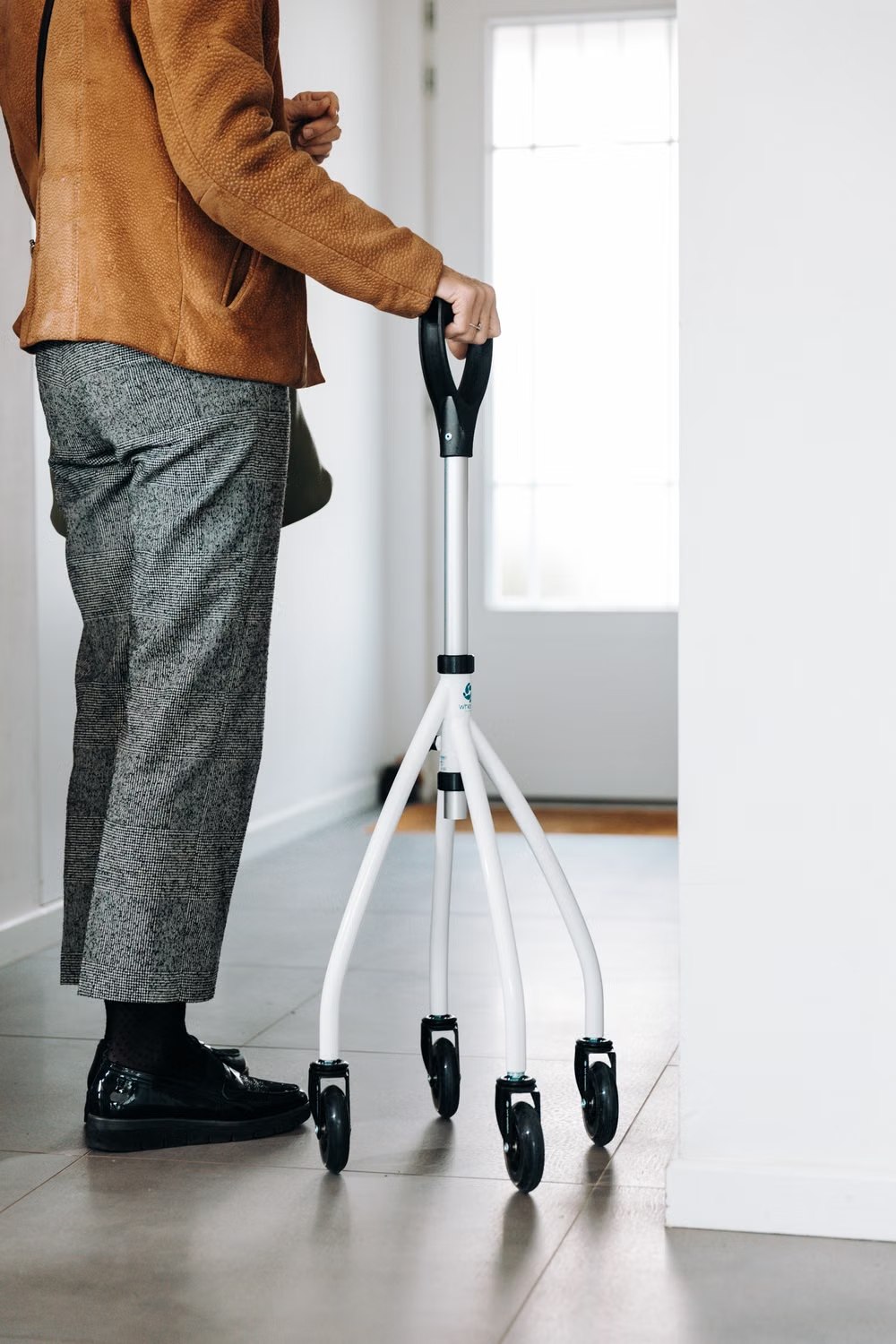
When a person begins struggling with daily tasks at home, the first instinct of many families is to start looking at residential aged care. What often gets missed is a far less disruptive alternative: an occupational therapist who visits the home, assesses what is actually making daily life difficult, and puts in place practical solutions that can extend safe, independent living by months or years.
Occupational therapy is one of the most underused tools in Australia’s aged care prevention toolkit. Its absence from early conversations about declining function costs individuals their independence and costs the health system considerably more in downstream residential care, hospital admissions, and emergency presentations. Falls alone were the leading cause of injury hospitalisation in Australia in 2024 to 2025, costing the health system an estimated $5.4 billion in 2023 to 2024, with 95 per cent of fall-related deaths occurring in people aged 65 and over.[1]
The policy direction is clear. Under Support at Home, which replaced the former Home Care Package system on 1 November 2025, occupational therapy is classified as clinical care and is fully government funded. From 1 October 2026, personal care services such as showering and dressing are scheduled to move into that same fully funded clinical care category. Keeping people at home is the stated priority. Occupational therapy sits at the centre of making that policy work in practice.
What Occupational Therapists Actually Do in a Home Setting
Occupational therapists assess the relationship between a person, their environment, and the activities that matter to them. In a home visit context, this means walking through the kitchen, bathroom, bedroom and garden with the client, not reviewing a checklist in a clinic.
The practical output varies significantly by person. For one client, it might be recommending a specific shower chair and grab-rail configuration that prevents a fall. For another, it might be a cognitive assessment identifying that early memory changes are affecting medication management, and that a blister pack system and phone reminders would allow them to remain at home safely. For a third, it might be a full home modification recommendation submitted to their Support at Home provider, funded as clinical care with zero participant co-contribution.
This zero co-contribution point matters and is frequently misunderstood by families. Under Support at Home, nursing and allied health services including occupational therapy, physiotherapy, podiatry and speech pathology are classified as clinical care. They are fully government funded, with no co-contribution regardless of the participant’s income or assets.[2] Many older Australians and their families do not know this, and as a result they decline or defer services they are entitled to receive at no personal cost.
Occupational Therapy and Fall Prevention: What the Evidence Actually Shows
Falls are among the most common reasons older Australians enter residential aged care earlier than necessary. A significant fall, or fear of falling, triggers a loss of confidence that compounds physical decline rapidly.
The evidence for home-based OT fall prevention is genuinely encouraging but not uniform, and it is worth being straight about that. The Cochrane review of falls prevention in community-dwelling older people found that home safety assessment and modification reduced the rate of falls (rate ratio 0.81, six trials, 4,208 participants) and the risk of falling (relative risk 0.88, seven trials, 4,051 participants).[3] Critically, the review concluded these interventions were more effective in people at higher risk of falling, and more effective when delivered by an occupational therapist rather than another professional.[3]
However, the largest single trial in this area produced a different result. The OTIS randomised controlled trial in England, involving 1,331 community-dwelling people aged 65 and over deemed at risk of falling, found no evidence that a single OT-delivered home assessment and modification reduced falls compared with usual care.[4] A 2023 systematic review and meta-analysis of home hazard modification found a modest 7 per cent reduction in falls that sat at the edge of statistical significance.[5]
What does this mean practically? The evidence supports OT home assessment most strongly for people who are already at elevated risk, for instance following a fall, a hospital admission, or with significant visual or cognitive impairment, and where the intervention is thorough and followed through rather than a single visit with a list of recommendations. A one-off assessment for a generally well older person is a weaker proposition than sustained, targeted input for someone whose function is genuinely declining. That distinction should shape when families and GPs reach for a referral. The 2025 Australian Falls Guidelines include home-safety assessment among evidence-based components of multifactorial falls prevention, alongside balance and strength exercise.[6]
The referral culture is a separate problem. Occupational therapy remains systematically under-referred by GPs relative to physiotherapy and psychology, even in situations where environmental assessment and activity modification would produce the clearest clinical benefit. Since 1 July 2025, referrals to allied health under Medicare operate through the GP Chronic Condition Management Plan (GPCCMP), which replaced the former GP Management Plan and Team Care Arrangement. Under the GPCCMP, GPs can refer eligible patients to up to five allied health sessions per year on a standard referral letter, with 18-month validity and a Medicare rebate of around $61.80 per session. The five-session cap is modest, but it is often sufficient to complete a home assessment, recommend modifications, and review progress.
The Support at Home Pathway: How OT Fits Into the New System
Australia’s aged care system has undergone significant structural change. Support at Home launched on 1 November 2025 under the Aged Care Act 2024, replacing the former Home Care Package system with a model that separates clinical care from independence and everyday living supports.[2]
For occupational therapy specifically, this means:
- Clinical OT services (assessments, rehabilitation, cognitive support, home modification recommendations) are classified as clinical care, with zero co-contribution from the participant.
- Independence services such as aids and equipment may attract a contribution and count toward the lifetime non-clinical contribution cap of $135,318.69 for new entrants, or $84,571.66 for no-worse-off transitioners. Assistive technology and home modifications are also supported through a separate AT-HM scheme, for which an OT prescription is typically required.
- The Restorative Care Pathway provides a separate allocation of around $6,000, and up to around $12,000 for eligible participants, over up to 16 weeks, with clinical care at zero co-contribution. This pathway suits post-hospital recovery or reablement where intensive OT input can restore function and reduce ongoing support needs.
Entry to Support at Home involves the Single Assessment System using the Integrated Assessment Tool, which replaced the former ACAT process from December 2024. Occupational therapists frequently contribute to this process, either as assessors or as clinicians whose recent functional reports inform the assessment. Because the determination draws on structured clinical information, a current OT functional report can materially affect the support level a person is assessed as needing.
For families not sure where to start, My Aged Care (1800 200 422) remains the contact point for all aged care service enquiries.
Hospital Discharge: Where OT Intervention Is Most Time-Critical
One of the highest-risk transition points for older Australians is hospital discharge. The period immediately after a hospitalisation is when function is often at its lowest, carer systems are disrupted, and the likelihood of a return presentation or a move to residential care is highest. Australian research indicates roughly one in seven discharges results in an unplanned readmission within 28 days, and peak readmission risk falls on days two to four after going home.[7]
The Transition Care Program, restructured under the Aged Care Act 2024 from 1 November 2025, provides up to 12 weeks of support after hospital discharge, with home-based care typically beginning within 48 hours of leaving hospital.[2] Occupational therapy is one of the core clinical services within this program. The goal is explicitly restorative: to recover function, reduce carer burden, and avoid a premature trajectory toward residential care.
Despite this, discharge planning in Australian public hospitals frequently underutilises OT capacity. Public hospital pressure remains acute, even with the 2026 to 2031 National Health Reform Agreement Addendum delivering around $25 billion in additional Commonwealth funding from 1 July 2026.[8] Emergency department crowding, discharge delays and workforce shortages mean allied health input during discharge planning is often compressed or omitted. The therapists on our network report regularly being contacted by families days or weeks after discharge when a person has already deteriorated, which is exactly the wrong sequence.
Given that the highest-risk window is the first few days at home, an OT visit within the first week of discharge is far more valuable than one arranged six weeks later. The earlier the assessment, the more function can be preserved.
Cognitive Decline, Dementia, and the OT Role That Gets Overlooked
Dementia is now Australia’s leading cause of death, accounting for almost one in ten deaths in 2024, with an estimated 446,500 Australians living with dementia in 2026.[9] The occupational therapy response to cognitive decline is one of the discipline’s most valuable and least understood contributions to keeping people at home longer.
Cognitive occupational therapy includes assessing how a person with early or moderate dementia manages their daily routine, identifying which tasks are breaking down and why, and designing compensatory strategies that maintain safety and dignity. This might mean restructuring the morning routine, labelling kitchen items, adjusting the home layout to reduce confusion, or working with carers on how to support tasks without taking over them.
It is worth noting honestly that the international evidence for structured dementia-specific OT programs is promising but has been inconsistent across settings, with some trials showing substantial functional benefit and others failing to replicate it. What is not in dispute is that environmental and routine modification addresses problems a clinic consultation cannot see.
The Strengthened Aged Care Quality Standards, in effect from 1 November 2025, now legally require aged care providers to have systematic processes to identify, assess, manage and review pain (Standard 5, Clinical Care).[10] This matters particularly for people with dementia who cannot reliably self-report pain, and it signals a broader regulatory shift toward systematic clinical assessment in home-based aged care, which increases the formal role of occupational therapy in ongoing care reviews.
For people with dementia not yet receiving formal aged care services, the GPCCMP provides five Medicare-rebated sessions, which may be sufficient for an initial cognitive assessment and environmental review. For those already in Support at Home, OT input is clinical care with no co-contribution.
Telehealth, Access, and the Limits of Remote OT
Telehealth has expanded significantly since 2020, and it retains value for initial consultations, follow-up reviews, and carer coaching. However, a core principle of occupational therapy is that the environment shapes function. For an OT conducting a home safety assessment, telehealth is not a substitute for a physical visit.
This distinction matters as Australia’s health system becomes more digitally mediated. From 2026, pathology and diagnostic imaging results are being brought into default sharing with My Health Record, and digital records are increasingly central to coordinated care. But digital coordination is not the same as in-person assessment. An OT reviewing a My Health Record summary cannot see that the bathroom has no grab rail, that the shower base is cracked and slippery, or that the kitchen is arranged in a way that requires repeated dangerous reaching.
Telehealth also carries a Medicare access condition. From 1 November 2025, Medicare telehealth rebates require an in-person GP visit within the previous 12 months or enrolment in MyMedicare. For older Australians who have difficulty getting to a GP clinic, this rule can create a barrier to the very telehealth consultations meant to improve their access. Families should be aware of this when planning a care pathway.
The therapists on our network are predominantly mobile practitioners who conduct in-home visits precisely because the home environment is the clinical context. Telehealth complements that work; it does not replace it.
The Workforce Problem Sitting Behind All of This
Occupational therapy workforce supply in Australia is uneven. Metropolitan areas have reasonable access, though wait times through public systems can still run to weeks. Regional, rural and remote areas face significantly longer waits or no local access at all.
The aged care sector’s workforce challenges apply equally to allied health. The push toward home-based care is the right policy direction, but it depends on having enough qualified therapists to deliver services in the community rather than in institutional settings. That workforce does not currently exist in sufficient numbers, particularly outside major centres.
Mobile OT services connected through platforms like Home Visit Network partially address this by matching available mobile practitioners to clients by location, reducing the gap between referral and first appointment. Families and care coordinators can search by postcode to find practitioners who visit at home. But a platform can only match what exists. The underlying workforce challenge requires sustained investment in allied health training and incentives for community-based practice.
Carers managing without formal support are also at risk. If you are coordinating care for an older family member and feeling stretched, Carer Gateway (1800 422 737) provides practical support, coaching, and respite referral.
Frequently Asked Questions
Can an occupational therapist visit my home, or do I have to go to a clinic?
Yes. Mobile occupational therapists conduct full clinical assessments in your home. This is the preferred approach for older adults and people with disability, because the home environment is the context the therapist needs to assess. Home Visit Network connects people with qualified mobile OTs by postcode.
Does an OT home assessment actually prevent falls?
The evidence is positive but not uniform. Cochrane review findings show home safety assessment and modification reduces the rate of falls, and that the benefit is greatest for people at higher risk of falling and when the intervention is delivered by an occupational therapist. However, one large trial found no benefit from a single assessment in a general at-risk population, and a recent meta-analysis found only a modest reduction. The practical takeaway is that OT input works best for people already at elevated risk, such as after a fall or hospital admission, and when recommendations are actually implemented rather than simply issued.
Does Medicare cover occupational therapy at home?
Medicare can cover up to five allied health sessions per year, including occupational therapy, when referred through a GP Chronic Condition Management Plan (GPCCMP). The rebate is around $61.80 per session. For people receiving Support at Home, OT is classified as clinical care and attracts zero participant co-contribution.
How does an OT actually help someone stay out of aged care?
Occupational therapists identify the specific tasks that are becoming unsafe or impossible and design practical solutions: home modifications, assistive equipment, routine restructuring, cognitive compensatory strategies, and carer education. Addressing these early can slow the cascade of decline that often leads to residential care.
Is occupational therapy covered under Support at Home with no out-of-pocket cost?
Yes. Under Support at Home, which commenced 1 November 2025, occupational therapy is classified as clinical care and is fully government funded, with no co-contribution regardless of income or assets. Note that equipment and home modifications sourced on an OT’s recommendation may sit under separate arrangements, including the assistive technology and home modifications scheme.
What if I am not yet receiving aged care services but my parent is struggling at home?
Start with a GP referral for a GPCCMP, which can unlock five Medicare-rebated OT sessions. Simultaneously, contact My Aged Care on 1800 200 422 to begin an eligibility assessment through the Single Assessment System. An OT can provide a home assessment and recommendations while the broader aged care pathway is initiated in parallel.
Can OT help after someone comes home from hospital?
Yes, and the earlier the better. The Transition Care Program provides up to 12 weeks of post-hospital support including OT, with home-based care typically beginning within 48 hours of discharge. Because peak readmission risk falls in the first few days at home, an OT visit in that first week is considerably more useful than one arranged weeks later.
References
- Australian Institute of Health and Welfare. Injury in Australia: Falls (leading cause of injury hospitalisation 2024–25; approximately $5.4 billion cost 2023–24; 95% of fall deaths among people aged 65+).
- Australian Government Department of Health, Disability and Ageing. Support at Home Program (clinical care fully funded with no co-contribution; Restorative Care Pathway; Transition Care Program). Commenced 1 November 2025.
- Gillespie LD et al. Interventions for Preventing Falls in Older People Living in the Community. Cochrane Database of Systematic Reviews, CD007146 (home safety assessment and modification: rate of falls RaR 0.81; risk of falling RR 0.88; more effective in higher-risk people and when delivered by an occupational therapist).
- Cockayne S et al. Home Environmental Assessments and Modification Delivered by Occupational Therapists to Reduce Falls in People Aged 65 Years and Over: the OTIS RCT. NIHR Health Technology Assessment, 2021 (1,331 participants; no evidence of reduced falls versus usual care).
- Home Hazard Modification Programs for Reducing Falls in Older Adults: A Systematic Review and Meta-Analysis. PeerJ, 2023 (10 studies, 1,960 participants; 7% reduction in falls, RR 0.93, 95% CI 0.87–1.00).
- Australian Commission on Safety and Quality in Health Care. Australian Falls Guidelines 2025 (multifactorial falls prevention including home safety assessment).
- Considine J et al. Factors Associated with Unplanned Readmissions in a Major Australian Health Service. Australian Health Review. See also Heart, Lung and Circulation, 2025 (peak readmission risk days 2 to 4 post-discharge).
- Australian Government Department of Health, Disability and Ageing. National Health Reform Agreement 2026–2031 Addendum (additional Commonwealth public hospital funding, effective 1 July 2026).
- Dementia Australia and AIHW. Dementia Facts and Figures / Australia’s Health 2026 (leading cause of death, almost 1 in 10 deaths in 2024; 446,500 Australians living with dementia in 2026).
- Aged Care Quality and Safety Commission. Safety of Clinical Care Services, Strengthened Quality Standard 5, effective 1 November 2025.