GP Chronic Condition Management Plan
Osteopath vs Physiotherapist Home Visit: Which Do You Need?

If you’ve ever sat down to book a home visit for pain or movement problems and found yourself staring at two options that seem almost identical, you’re not alone. Osteopaths and physiotherapists both come to your home. Both work hands-on with your body. Both are registered with AHPRA. Both treat back pain, neck pain, and musculoskeletal complaints. And both will ask you a lot of questions before they put their hands on you.
The confusion is completely reasonable.
But the differences between these two professions are real, and for many patients—especially those who are housebound, recovering from surgery, or managing a complex condition—choosing the right one from the start can save weeks of treatment time and a significant amount of money. Families who use our platform tell us that this is one of the most common questions they ask before booking a first appointment, and it’s a question worth answering properly.
This post lays out the actual differences in plain language, walks through which profession tends to be the better fit for specific situations, and covers the funding picture honestly so you know what to expect before anyone walks through your front door.
What Each Profession Actually Does
Physiotherapy: Function, Rehabilitation and Evidence-Based Movement
Physiotherapists are movement specialists with a strong grounding in anatomy, biomechanics, and rehabilitation science. Their training is deeply aligned with evidence-based practice, which means their treatment approaches are closely tied to clinical research and measurable outcomes.
In a home visit setting, a physio will typically assess how you move, identify what’s limiting that movement, and build a programme to restore function. That might involve hands-on manual therapy, but it will almost always include exercises, education, and a clear progression plan.
Where physiotherapy has particularly strong footing:
- Post-surgical rehabilitation (hip and knee replacements, spinal surgery, rotator cuff repairs)
- Neurological conditions (stroke recovery, Parkinson’s disease, multiple sclerosis, acquired brain injury)
- Paediatric developmental conditions (cerebral palsy, developmental delays, coordination disorders)
- Cardiorespiratory conditions (post-hospitalisation, chronic obstructive pulmonary disease)
- Falls prevention in older adults
- Chronic disease management as part of a GP-coordinated care plan
Physiotherapy also has the broadest access to public funding pathways in Australia, which we’ll come back to shortly.
Osteopathy: Whole-Body Structural Assessment and Manual Therapy
Osteopaths work from a philosophy that the body’s structure and function are deeply interconnected, and that restrictions in one area often create compensatory strain elsewhere. Their training places a heavy emphasis on manual assessment and treatment of the musculoskeletal system, including joints, muscles, fascia, and connective tissue.
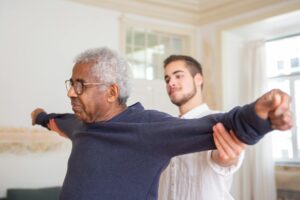
A home visit with an osteopath will typically involve a thorough postural and movement assessment followed by hands-on treatment using techniques like soft tissue massage, joint mobilisation, stretching, and gentle manipulation. Consultations tend to run longer than a typical physio appointment, often 45 to 60 minutes, because the assessment process is comprehensive and considers the whole body rather than isolating a single region.
Where osteopathy tends to be a strong fit:
- Persistent back and neck pain, particularly where the root cause hasn’t been clearly identified
- Tension headaches and cervicogenic headaches
- Pregnancy-related musculoskeletal discomfort (pelvic girdle pain, lower back pain, rib discomfort)
- General presentations where something feels “off” but imaging and specialist reports have come back clear
- Postural strain from prolonged inactivity, bed rest, or sedentary work
- Shoulder, hip and pelvic complaints with a mechanical or structural component
The therapists on our network report that osteopathy is particularly valued by patients who feel like their pain hasn’t been fully explained or addressed through other pathways, and who want a thorough, whole-body assessment rather than isolated treatment of a single area.
What the Evidence Says About Osteopathy
A 2026 systematic review and umbrella review published in Healthcare (MDPI) provides the most comprehensive current synthesis of the evidence for osteopathy across multiple body regions [1]. Drawing on RCTs across five databases and including an updated search to July 2025, the review found that for low back pain (ten RCTs, 1,160 participants), osteopathic treatment reduced pain immediately and at mid-term follow-up. For neck pain, three of four RCTs showed improvement immediately post-treatment. Benefits were also observed for shoulder, knee, and foot pain. Adverse events were minor and transient across all included studies. An updated search from 2022 to July 2025 identified 12 additional RCTs broadly consistent with these findings.
The evidence is not uniform across all osteopathic techniques. A separate 2025 systematic review found that visceral osteopathy—a specific technique targeting internal organs—showed no clinical benefit for musculoskeletal conditions, with the most methodologically rigorous trials tending toward negative findings [1]. This distinction matters: the evidence for structural and manual osteopathic treatment of musculoskeletal pain is considerably stronger than the evidence for visceral techniques. When selecting a practitioner, it is worth asking about their approach and which techniques they primarily use.
Both Are AHPRA-Registered: What That Actually Means
Both physiotherapists and osteopaths in Australia are registered through AHPRA (the Australian Health Practitioner Regulation Agency) and must meet ongoing continuing professional development requirements to maintain their registration [2].
This means both professions have:
- Completed an accredited university degree (minimum four years for physiotherapy, five years for osteopathy)
- Passed national registration requirements
- Obligations around professional conduct, insurance, and scope of practice
Neither profession is unregulated or alternative in the dismissive sense the word is sometimes used. Both are recognised by Medicare, the NDIS, DVA, and most private health insurers, though to different degrees.
Real Examples: Which One Tends to Fit Which Situation
Post-Hip Replacement Rehab: Lean Toward Physiotherapy
After a total hip replacement, your surgeon and hospital team will have given you a specific set of precautions and a rehabilitation pathway. A physio with experience in post-surgical rehab will be familiar with this protocol, will know how to progress your exercises safely within those precautions, and will be able to communicate with your surgical team if needed.
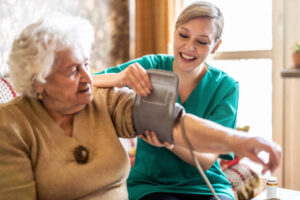
This is exactly the kind of structured, goal-oriented, protocol-driven rehabilitation where physiotherapy’s evidence-based framework is at its most valuable. Your GP may also be able to issue a referral under the GP Chronic Condition Management Plan (GPCCMP), which provides up to five Medicare-subsidised allied health visits per year for patients with a chronic or complex condition.
Stroke Recovery and Neurological Rehab: Physiotherapy
Stroke rehabilitation requires specialist neurological physiotherapy skills including working with spasticity, retraining movement patterns, fall risk management, and supporting carer education. This is an area where physiotherapy’s specific training in neurological conditions gives it a clear advantage.
In our experience working with mobile practitioners, neurological physios who do home visits are often able to assess the actual home environment and make recommendations that a clinic-based therapist simply can’t—including identifying trip hazards, suggesting equipment, and working with the layout of the space the patient actually lives in.
Paediatric Developmental Work: Physiotherapy
Children with developmental delays, cerebral palsy, hypermobility, or coordination difficulties are typically best supported by a paediatric physiotherapist. NDIS funding for paediatric allied health is accessed through the Capacity Building budget, and most paediatric NDIS plans will specify physio as a core allied health intervention.
Persistent Back Pain Where Nothing Has “Fixed It”: Consider Osteopathy
This is probably the most common situation where patients land on osteopathy, and it’s entirely appropriate. If you’ve had back pain for months or years, you’ve had scans that showed nothing dramatic, and you’ve tried other treatments without lasting relief, an osteopath’s whole-body structural assessment can sometimes identify patterns of restriction and compensation that haven’t been picked up elsewhere. The 2026 systematic review above supports this: across ten RCTs covering 1,160 participants, osteopathic treatment reduced low back pain immediately and at mid-term follow-up [1].
The longer consultation time that osteopaths typically offer matters here. There’s time to actually understand your history, observe how you move, and work through the body systematically rather than focusing only on the site of pain.
Tension Headaches and Neck Tension: Consider Osteopathy
Cervicogenic headaches (headaches originating from the neck) and tension headaches with a strong postural or mechanical component respond well to osteopathic manual treatment. The whole-body approach is useful here because neck tension often connects to shoulder restriction, thoracic stiffness, and even hip and pelvic posture.
Pregnancy-Related Discomfort: Consider Osteopathy
Pelvic girdle pain, pubic symphysis discomfort, lower back pain, and rib pain during pregnancy are areas where osteopathy has a well-established role. Many osteopaths have specific training in pregnancy care and will adapt their techniques appropriately for each trimester. For housebound pregnant patients or those with significant mobility challenges, a home visit osteopath can be genuinely transformative.
The Funding Picture: An Honest Overview
This is where the differences between the two professions become most practically significant for many Australian patients.
Medicare — GP Chronic Condition Management Plan (GPCCMP)
Medicare does not cover standard physiotherapy or osteopathy appointments. However, from 1 July 2025, both professions can be accessed under the GP Chronic Condition Management Plan (GPCCMP), which replaced the previous GP Management Plan and Team Care Arrangement items [3]. The GPCCMP provides eligible patients with a chronic or complex condition up to five subsidised allied health visits per calendar year, with a current Medicare rebate of $61.80 per session. Referrals are issued via a standard referral letter from your GP.
Physiotherapists are accessed under this scheme far more commonly than osteopaths, partly because GPs are more likely to refer to physiotherapy for the conditions that typically qualify. Osteopaths are eligible for GPCCMP referrals, but in practice this pathway is used less frequently. If you are seeking osteopathy under a GPCCMP, confirm with your GP that they are comfortable issuing a referral for this profession.
Private Health Insurance
Both physiotherapy and osteopathy are typically covered under extras cover with most Australian private health insurers. The annual limits vary widely between funds and policies. If you have extras cover, check your specific policy for annual limits on each profession, as these are separate categories with separate caps [3].
NDIS
Physiotherapy is one of the most commonly funded allied health services in NDIS plans. From 1 July 2025, all allied health therapy supports—including physiotherapy and osteopathy—must be funded from the Capacity Building budget (specifically the Improved Daily Living category); the previous flexibility to draw on Core supports for therapy no longer applies [3]. The current NDIS price cap for physiotherapy is $183.99 per hour, following a $10 per hour reduction in the 2025–26 pricing arrangements.
Osteopathy can also be funded under NDIS but is less commonly included in plans and may require specific justification in the planning process. Importantly, osteopaths are not yet listed in the NDIA price guide as a recognised profession for registered providers—meaning NDIS participants who access osteopathy must be self-managed or plan-managed to do so [3]. This is a meaningful practical distinction when comparing the two professions for NDIS-funded home visits.
A significant change from 1 July 2025 also affects the financial viability of mobile services for both professions: provider travel reimbursement is now capped at 50% of the hourly therapy rate, down from 100%. In regional areas, travel is capped at 60 minutes each way, and jurisdictional price loadings for WA, SA, TAS, and NT were simultaneously removed—representing a net reduction of up to $40.06 per hour for providers in those states [3]. Every major allied health peak body, including the Australian Physiotherapy Association and Osteopathy Australia, has formally opposed these changes. When contacting a mobile practitioner for NDIS-funded visits, it is worth asking directly whether the July 2025 travel changes have affected their availability or travel range in your area.
Support at Home (Aged Care)
For older Australians who are housebound or receiving in-home aged care, the Support at Home program launched on 1 November 2025, replacing Home Care Packages entirely [3]. Allied health services—including physiotherapy—are classified as clinical care under the program, meaning they are fully government-funded with no out-of-pocket participant contribution. Physiotherapy was explicitly included in the Support at Home service list from launch.
Osteopathy’s status under Support at Home has been more complicated. Osteopathy was initially omitted from the allied health and therapy service list. Following advocacy by Osteopathy Australia, the Department of Health and Aged Care confirmed in early 2025 that the omission would be corrected [3]. If you are an older Australian receiving Support at Home and wish to access osteopathy as part of your care, confirm the current status with your provider or contact My Aged Care, as the position may continue to evolve.
For housebound patients and their families, this distinction is practically significant: physiotherapy is the more straightforward choice if you are accessing care through Support at Home.
DVA
Both physiotherapy and osteopathy are covered for eligible Department of Veterans’ Affairs (DVA) Gold and White Card holders, subject to referral requirements. Mobile home visit services are available under DVA funding for eligible veterans. The therapists on our network who work with DVA clients report that home visit care is particularly important for veterans with mobility limitations or those living in areas with limited clinic access.
Self-Funded
For patients who are paying privately, osteopathy consultations often run longer but at a similar or slightly higher fee than physiotherapy. Costs vary significantly by location and practitioner. Home visits typically attract a travel fee or higher base rate than clinic appointments, which is true for both professions.
A Practical Decision Guide
Choose physiotherapy if:
- You’re recovering from surgery
- You have a neurological condition
- You need care for a child with developmental needs
- You’re accessing NDIS or GPCCMP funding and want the path of least resistance
- You need a structured exercise rehabilitation programme
Choose osteopathy if:
- You have persistent pain that hasn’t been clearly explained
- You want a whole-body structural assessment
- You’re experiencing tension headaches or neck stiffness
- You’re pregnant and dealing with musculoskeletal discomfort
- You feel like something is “off” but tests have come back normal
And if you’re genuinely unsure, both professions are trained to recognise when a referral to the other is appropriate. A good mobile therapist will tell you if they think someone else is better placed to help.
FAQ
Can a physiotherapist and osteopath both visit me at home?
Yes. Both professions offer mobile home visit services across much of Australia. Availability depends on your postcode and the practitioners currently working in your area. You can search by postcode on Home Visit Network to see who is available near you.
Is osteopathy covered by Medicare?
Osteopathy is not covered under standard Medicare. However, osteopaths can be accessed via the GP Chronic Condition Management Plan (GPCCMP), which replaced the old GP Management Plan items from 1 July 2025. This provides up to five subsidised allied health visits per year at a $61.80 rebate per session. In practice, GPs refer to osteopathy under this scheme less frequently than physiotherapy.
Which profession is better for back pain?
Both treat back pain. For acute back pain following surgery or injury with a clear diagnosis, physiotherapy’s rehabilitation framework is often the better fit. For persistent, unexplained, or complex back pain where previous treatments haven’t resolved the issue, osteopathy’s whole-body structural approach often provides a more thorough assessment—supported by clinical trial evidence showing pain reduction immediately and at mid-term follow-up.
Do I need a referral to see a physiotherapist or osteopath at home?
No referral is required to book either a physiotherapist or osteopath privately. A referral letter from your GP is required if you wish to access Medicare subsidies through a GPCCMP, or if you are accessing DVA funding.
Can the NDIS fund a home visit physiotherapist or osteopath?
Yes. From 1 July 2025, all allied health therapy supports under NDIS are funded from the Capacity Building budget (Improved Daily Living category). Physiotherapy is one of the most commonly funded services. Osteopathy can also be NDIS-funded but is less commonly included in plans. Check your plan’s support categories with your support coordinator.
How do I find a mobile osteopath or physiotherapist in my area?
Use the postcode search on Home Visit Network to see which mobile osteopaths and physiotherapists currently service your area. The platform was built specifically to connect Australians with qualified mobile practitioners, including those who specialise in home visits for housebound or high-needs patients.
Find a Mobile Practitioner in Your Area
Whether you’ve decided on a physiotherapist or an osteopath, or you’re still working through it, the best next step is seeing who is actually available near you. Use the postcode search on Home Visit Network to browse mobile osteopaths and physiotherapists currently servicing your area, including their areas of specialisation, funding options they accept, and availability for new patients.
Healthcare should come to you. That’s the whole idea.
References
- Bagagiolo D, et al. Osteopathy for musculoskeletal pain: a systematic and umbrella review of effectiveness and safety. Healthcare. 2026;14(7):928. doi: 10.3390/healthcare14070928. Updated search to July 2025 included 12 additional RCTs. Published online 2 April 2026; Ceballos-Laita L, Ernst E, et al. Is visceral osteopathy therapy effective? A systematic review and meta-analysis. Osteopathische Medizin. 2025;26(3). doi: 10.1016/j.ostmed.2024.100441
- Australian Health Practitioner Regulation Agency (AHPRA). Registration standards and requirements for physiotherapy and osteopathy. ahpra.gov.au
- Department of Health, Disability and Ageing. GP Chronic Condition Management Plan (GPCCMP), effective 1 July 2025. MBS items 10960 (physiotherapy) and 10966 (osteopathy) claimable under CCM framework items 392/965. Up to 5 allied health visits per calendar year; $61.80 rebate per session. health.gov.au; Support at Home Program — physiotherapy explicitly listed as clinical care (zero participant contribution) from 1 November 2025; osteopathy inclusion confirmed following Osteopathy Australia advocacy, February 2025. health.gov.au; National Disability Insurance Agency. NDIS Pricing Arrangements and Price Limits 2025–26. Allied health therapy supports exclusively Capacity Building — Improved Daily Living from 1 July 2025. Physiotherapy rate: $183.99/hr. Provider travel capped at 50% of hourly rate; regional area maximum 60 minutes; jurisdictional loadings for WA, SA, TAS, NT removed (net reduction up to $40.06/hr). Osteopathy not in NDIA price guide for registered providers. ndis.gov.au; Osteopathy Australia. Advocacy submissions on Support at Home service list and NDIS pricing, February 2025. osteopathy.org.au